Showing posts with label faith. Show all posts

Thursday, January 19, 2017

Fun, Family, or Faith?- What is Modern Orthodoxy really about?


"He is searching not for a faith in all its singularity and otherness, but for religious culture."

Rav Yosef Soloveichik in the Lonely Man of Faith

Rav Soloveichik once said that rabbis and teachers had managed to give Shabbos over to their congregants and students, but had not succeeded in giving over Erev Shabbos. They had managed to give over the rules of Shabbos, but were unable to convey its spirit and purpose. In thinking of the Modern Orthodoxy of today, I would paraphrase these words and say that we have been succeeded in conveying the religion of Adam I to the next generation, but have failed in giving over the faith of Adam II.

An essay was recently written which suggested that intermarriage is starting to spread to the MO world. While I think the claim of the writer is mistaken, and certainly disagree with the possibility that the intermarriage rate in our community is 10%, I do not disagree that we are increasingly facing the failure of our community to produce a next generation who are meaningfully engaged with Judaism as a religion.

In Lonely Man of Faith, Rav Soloveichik famously speaks of Adam I and Adam II. In discussing the approach of the former towards religion, the Rav speaks of a person who is interested in what religion offers him. He likes the community aspect, and the connection to tradition and customs. He might heartily agree that “the family that prays together, stays together”. Adam II on the other hand sees Judaism not just for what it adds to his life, but also as something which connects him to Ratzon HaShem. Instead of asking what he gets from being religious, he looks at what is asked of him. He is searching for a faith. It is my strong contention that Modern Orthodoxy of today is largely a community of Adam I, and only rarely a community of Adam II.

If Judaism is nothing more than a system which is supposed to produce happiness and meaning, than how can we be surprised when our children decide that what made us happy is not what leads to their happiness? Why shouldn’t they move towards a more egalitarian approach to religion, or even more towards taking from religion only that which works? If we move entirely away from the language of commandedness, to one of choice, why should we be surprised when our children, in fact, choose?

We’ve somehow arrived at a largely bifurcated educational system where we either emphasize text learning or a more fun approach that is more about finding meaning. What both of these approaches lack is the thick religious experience which is more commonly found in the charedi world. We, and by we, I mean our homes, shuls, communities, and schools are not giving over a religious experience which reaches our kids in their kishkes. We’ve got minyan three times a day, daf yomi, kosher sushi, and sleepaway camps, but do we have a relationship with God. We are frum, but are we religious?

If I’m honest, I’m not sure if we as a community really want more than what we have right now, but if we do, it is going to take more than changing school curricula. Even if our schools, and Israel yeshivot and seminaries can light the spark in our children, in which community are our children supposed to land? With all the hand wringing that exists over kids “moving to the right” (a phrase that needs to be unpacked), why would we expect our children who have discovered the deep meaning of Judaism to stay in our community if we are unable, or even worse, uninterested in producing a community that is more connected to God? If our daughter has discovered the joy and meaning of davening, why should she attend a shul where talking during davening is the norm. If our son loves singing slow plaintive zemiros, will he enjoy a Shabbos meal where the talk mainly revolves around politics and pop-culture?

If we are unable to give over Shabbos and Erev Shabbos, our kids will either look for a community that does, or walk away from a neutered version of Shabbos which offers a nice family meal and some time away from technology, but little more. Those benefits can be found outside of our community, and yes, outside of our religion. If our kids are to stay, we need to offer them something deep and real. If we don’t, can’t, or won’t, we can’t complain if they take our decision seriously, and make their life choices accordingly.

Monday, April 27, 2015

Faith Restored - How Rav Aharon Lichtenstein zt"l helped me regain my faith


Where were his answers? How could he not have dealt with such important and pressing questions? As the most profound thinker in the Orthodox world, how could Rav Aharon Lichtenstein not have written something that would answer the challenges presented by biblical criticism? I was floundering, and desperately trying to hold onto my faith, and I needed the answers to my questions.

Looking back at that early stage of my search, I realize that the premise on which my questions were asked was flawed. As I was to discover, there are no perfect answers to the questions of biblical criticism that, magically, make the questions go away. Still, for a long time I was dismayed by the fact that Rav Aharon zt”l had not thought to take the issue on. To be sure, I was to discover that to some degree, Rav Aharon had in fact dealt with some aspects of biblical criticism. Still, he had limited that to a particular area, one that did not address my questions.

What struck me as odd at the time, was how frum (in the negative sense of the term) Rav Aharon’s approach to avoiding these questions seemed to me. How could someone with such an intellect, and depth and breadth of knowledge, simply suggest that one remain faithful. Couldn’t he, at the very least, explain to us how he had done so, and why the questions did not bother him? Or, if in fact they did bother him, why not explain how he lived with those questions?

Eventually I discovered that he had in fact given me the tools to stay within the world of faith. In 1996, Rav Aharon wrote, what for me was one of the most profound essays on faith. In it, he wrote:

What I received from all my mentors, at home or in yeshiva, was the key to confronting life, particularly modern life, in all its complexity: the recognition that it was not so necessary to have all the answers as to learn to live with the questions. Regardless of what issues--moral, theological, textual or historical--vexed me, I was confident that they had been raised by masters far sharper and wiser than myself; and if they had remained impregnably steadfast in their commitment, so should and could I. I intuited that, his categorical formulations and imperial certitude notwithstanding, Rav Hutner had surely confronted whatever questions occurred to me. Later, I felt virtually certain the Rav had, so that the depth and intensity of their service of G-d was doubly reassuring. (Emphasis added)

It seems he had questions of his own, and yet, due to his own humility and trust in those who had taught him, Rav Aharon had managed to live with the questions. If a gadol like him could live with the questions, and not just live, but live with a deep and profound faith, I too could live with my questions.

It is here that I come to what might be the most profound lesson that Rav Aharon can teach those of us in the world of Modern Orthodoxy. Many times, we are blown away by intellect. We speak about Torah U’Mada, dialectic, and synthesis. Some trot out Rav Aharon’s PHD from Harvard, as if that somehow validates him. Too often, we assume that serious intellectual engagement and deep faith are incompatible. Rav Aharon showed otherwise. The same person who knew Shas, and, l’havdil, Milton, cold, could say “Yehei Shmei Rabbah” with all of his strength, and read the words “Dirshu HaShem B’himatzo” from the depths of his soul. While I’m not sure how much we can take away from his searing intellect, I know how much we have to learn from his deep and passionate faith.

Monday, February 2, 2015

Putting Descartes Before the Horse- On knowledge, belief and proof


I was recently asked, not for the first time, how I know that God exists. It’s a question that is often directed at religious believers in general, and at teachers and members of the clergy in particular. Before we can talk about how we “know” this, or more correctly, why we believe, it is important to discuss what it means when we say we know or believe anything.


Although a more complete treatment of this topic would involve a discussion about epistemology, the philosophical study of knowledge, I will focus on a different area of discussion.


I was recently referred to an essay written by Isaiah Berlin, one of the preeminent thinkers of the twentieth century, by my friend Rabbi Todd Berman. In the essay, “The Concept of Scientific History”, Berlin explains why the attempt to treat history as a science, something that many considered an important goal for at least two centuries, is inherently futile. He conclusively shows that science, at least in its pure forms, can test claims and ascertain whether they are correct, while when it comes to the ideas of history, as well as many of its “facts”, this is not true. Thus there is a difference in kind, and not just degree, between saying that the egg broke because it fell on the hard surface, and saying that World War I started because Archduke Ferdinand was assassinated. He goes on to say something that shows that it is not just history which can not be treated like a pure science:


If I am asked what rational grounds I have for supposing that I am not on Mars, or that the Emperor Napoleon existed and was not merely a sun myth, and if in answer to this I try to make explicit the general propositions which entail this conclusion, together with the specific evidence for them, and the evidence for the reliability of this evidence, and the evidence for that evidence in its turn, and so on, I shall not get very far. The web is too complex, the elements too many and not, to say the least, easily isolated and tested one by one; anyone can satisfy himself of this by trying to analyse and state them explicitly. The true reason for accepting the propositions that I live on earth, and that an Emperor Napoleon I existed, is that to assert their contradictories is to destroy too much of what we take for granted about the present and the past (emphasis added).


Outside of math and the pure sciences when we talk about knowing things, we all use a different criteria for evaluating the truth of a statement. Even though we can not prove that we were not created last Thursday with memories of a false past, we all know that claim to be false.


Let’s take this a step further. How do we react when we read an article that makes a claim? Do we investigate it ourselves? Study the subject so that we know as much as an expert before deciding what we believe? Of course we do not. Somehow, in our inherently subjective experience, we form an opinion. Even as some of us try to know more before reaching a conclusion, we still fall far short of the level of rigor we would expect in a scientific experiment. What about when we read of two experts who disagree about a theory or idea? Do we commit to being agnostic due to our inability to evaluate which of the two are correct? Do we do a poll of all experts in the field? Would such a poll prove anything? In short, most of what we think we know comes from some combination of intuition, knowledge and whatever other conscious and subconscious thought that goes into deciding. We make decisions about family, safety, career and meaning without being able to prove almost anything.


So where does that leave us? I believe that it leaves us in the potentially uncomfortable position of recognizing that religion is a belief, and not something that  we can prove. As with most areas of life, we subjectively judge the facts and then make a decision. Our reasons for belief might not be able to convince anyone other than ourselves. For those of us who have relied upon the arguments of Medieval philosophers, be it Maimonides or Aquinas, accepting this idea can be somewhat disconcerting. Still, I am not convinced that this is a bad thing.

The inherent subjectivity of our religious beliefs allows us to believe with what Rabbi Herzl Hefter has called “soft certainty”. This level of belief allows for us to live a life of firm commitment, sure enough to serve, but not sure enough to destroy. In an unredeemed world, I don’t think we can ask for anything more.

Wednesday, January 14, 2015

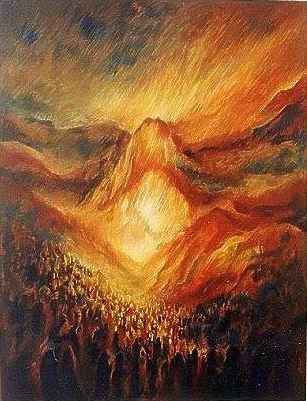
Sinai Moments- Coping with religious doubt


Many, if not most, religious people go through periods of religious doubt. While there are those like Rav Kook and Rabbi Norman Lamm, who explore the religious value of doubt, doubt can often be disturbing and demoralizing. What, if anything, can be done to get through the struggles that come with doubt? I'd like to discuss an idea that was discussed by Rav Eliezer Berkovits, and expand upon it.

In the fifth chapter of his classic work, God, Man and History, Rav Berkovits discusses the value of the initial religious encounter with God that occurred at Mount Sinai. Among other things, the encounter showed that God was a deity who was involved in the world and cared about his creation, as opposed to the unmoved mover of Aristotle. He suggests that the encounter serves as a reminder of God's care, during the many times when He seems absent from our lives. Just as the thought of her husband, might help an army wife, when her beloved is away at war, and make up for the silence and fear that he might not return, the Mount Sinai experience serves as a way of remembering God's concern, during those painful moments when that very care is in doubt.

What of those who were not actually at Mount Sinai? Rav Berkovits suggests that in the numerous commandments which reference the Sinaitic revelation, such as the Mishkan, HaKhel and Shavuos, one re-cognizes (once again thinks of) the revelation, moving it from a moment of history, to a personal experience.

For many of us, I'm not so sure that this is enough, and therefore, I'd like to go beyond Rav Berkowits point. I want to make clear that I am not suggesting that he would necessarily agree with my idea. Nonetheless, I think that my extension of his idea is not without merit.

There are moments in our lives when we experience God's care and concern. I can think of several such moments in my own life. While these experiences are inherently subjective, for those who experience them, they are real. I would call these moments “Sinai Moments”. While, unlike the revelation at Sinai, these moments are personal and will often mean little, if anything, to the one who has not experienced them, for the one who has, they express God's concern as much as the moment at Sinai did for those who were there. In this formulation, these Sinai moments are not merely to be appreciated at the moment that they occur. Rather, they are to be thought of at those times that one feels alone and distant from God. In thinking of these moments, we might experience God's absence as temporary, instead of doubting his very concern.


Whether it is through a deeply internalized experience of the Sinai-based mitzvos, as Rabbi Berkovits suggests, or through thinking of what I have termed Sinai moments, I would suggest that moments of doubt need not be experienced passively, hoping that we will once again experience the breath of the Divine, as it were. Rather, we can re-cognize moments of care, both big and small, which might help us get past our moments of doubt, even if only temporarily.

Monday, June 30, 2014

We Just Don't Know- Accepting the Pain of Uncertainty


I’m scared to write, but I struggle to hold back. I’m sad and hurting and angry, but mostly just numb. I keep thinking about what to tell my children who are here in Israel with me, but that implies that I know what to tell myself.

At moments like this, the usual answers of theology feel cheap. They are not enough. In some ways they feel more like a defense mechanism to push off the pain than like answers. We live in a society where, too often, the answer to sadness is an attempt to divert ones attention, by joking, by giving “answers”, by changing the subject, and, yes, by writing. It is as if we think that feelings are not to be felt.

Even worse, is the misguided sense that we need to defend God. That somehow, He needs us to defend him. When a child is hurting and angry, does a good father need his child to hold back his feelings? Do we do God and the cause of religion any favor by pretending we know why this happened? When our education leads us to think that we can give a meaningful answer, or even worse, the answer to a question that has plagued man since the beginning of time, we show just how poor that education was. A good parent or teacher knows that sometimes, the only answer is “I don’t know”. When it comes to God, how much more so should we not pretend to have an answer?

Sometimes it is best to let our children to see our tears flow down our cheeks, to feel that doubt and struggle are not bad and wrong, to give them the comfort of seeing their role-models struggle. If we learn texts that deal with this question, we must reinforce the idea that it is just one approach, rather than a definitive answer. If we want to turn to Torah, it should be to Tehillim or Iyov, and not some book which claims to know the Jewish view of… well, anything. There are almost no cases where there is a unified answer.

Our belief is most real if we treat God as God, as being beyond the understanding of man, as big enough to not be hurt by our anger or doubts, as One whose ways are not our ways. Let us give our children and ourselves the education of being real with ourselves, of dealing with our human emotions, of admitting the scary truth that we just don’t know.

Thursday, January 30, 2014

What's in a name? (Part I) - Losing and rediscovering my religion

From time to time, I will be writing about my reasons for choosing "Pesach Sheini" as the name for my blog. The more I have thought about the name, the more I have felt that it chose me and not the other way around. What follows is the first installation.


I remember the moment when I felt the first crack in the foundation of my beliefs. We were living in Israel, I was learning in the Aish HaTorah kollel, and I had bought my first Borsalino (ever the outsider, I mistakenly bought the one with a band with the “wrong” height). Although I had already received semicha, I was learning Torah ten hours per day, had seforim I learned on each leg of my bus trip to the old city, and wished I had more time to learn. I had, for the most part, rejected most of my modern orthodox upbringing, and I knew that, more often than not, the good guys wore black hats. I davened with the confidence and seriousness of a believer. My brilliant chavrusa Rafi was from England, where he had studied at Oxford. Rafi's brother was troubled by Rafi's decision to embrace an Orthodox lifestyle, which had happened, he thought, because Rafi had been brainwashed. He would send Rafi long and well researched annotated letters “proving” that the Torah couldn't be true. Rafi and I usually laughed at such a crazy notion. Which rational person could doubt the truth of our religion? Clearly, Rafi's brother was blind to the truth. One day, out of curiosity and amusement, I asked to see the latest letter. I read it and was shocked. I held in my hands excellent arguments against my understanding of one part of the Torah. Of course, I didn't let on that I found the points to be salient . Doubts were for heretics. For the believer, there are no questions, and for the heretic, no answers. Troubled by this question, I kept my thoughts inside my head for many years, until I asked someone who I could trust, and he showed me an answer from Rav Dovid Tzvi Hoffman. I would later learn that other well known rabbis, shared this understanding as well.

Several years later, we had moved to Baltimore. I was teaching Torah to high school students, and one boy was struggling with some doubts. He would come to me to discuss them. I did my best to answer the questions, and explain why I believed. Several times, my student asked me why I wasn't bothered by some of these questions. I responded, in truth, that they just didn't bother me. I had no way of knowing that, years later, I would be troubled by many of the same questions.

At my last teaching job, I had a close relationship with many of my brighter students, who knew that I would take their questions seriously, admit when I didn't have answers, and stick to a rational approach towards explaining Torah. Having thrown myself into Jewish philosophy and Torah and science, I enjoyed this reputation, and even encouraged it (without belittling other approaches). I don't remember the precise moment it started, but little by little, I started to wonder whether Judaism was true. Had you paid close attention to my words, during my last year of teaching, you would have sensed my struggles as I no longer spoke of my beliefs, speaking instead of what Chazal believed.

At first, I tried to find the answer to the questions which troubled me, certain that some genius from our tradition could set it all straight. I read whatever I could, spoke to roshei yeshiva, rabbis, professors, and learned laymen. Nothing I heard put my mind at rest. I went through a stage where I raged at the brilliant minds of the Modern Orthodox world, such as Rav Soloveitchik ZT”L, Rabbi Norman Lamm and Rav Aharon Lichtenstein (may they quickly have a full recovery). How, I wondered, could they not have dealt with these important issues? I searched far afield for answers, but much of what I came across just led to more questions, struggles and doubts. I knew I could not return to the classroom unless I could resolve my doubts. Outwardly, I kept up my observance, and even started learning daf yomi. Davening, on the other hand, was nothing but painful. We were struggling financially and with some other stresses that come with having a large family, and I was quite unsure whether my prayers had any effect or value. I started learning Torah during davening, not out of piety, but as an attempt to drown out my thoughts.

I figured out which friends I could trust with the secret of my struggles, and tried to keep my wife from finding out. Sadly, in that regard, I failed. I knew that, no matter which conclusion I reached, I would never stop living an outwardly observant lifestyle. I had “signed on the dotted line” by getting married and having children, and I refused to let my struggles send my family into crisis.

I headed into this past Yom Kippur numb, as if in a trance, for the first time ever, feeling nothing as the day approached. How could I do teshuva when I was struggling with so many of the premises on which teshuva is based? My one attempt at not giving up was a commitment to not read every article which raised questions, and to distance myself from some online connections who were helping fan the flames of my doubts.

Little by little, I started to find an approach that worked for me, and here, I get to one of my key conclusions. My answer did not need to be the answer. It didn't have to work for anyone else. As long as I found it convincing, that was all I needed. Brick by brick I examined each of my previous beliefs. Some I held onto and used them to reconstruct my new approach. Others, however painful it was to do so, were cast aside. Thinking back to my student from Baltimore, I understood why his questions did not bother me at the time. For me at least, even the most serious intellectual questions only become earth shattering at times when my life feels out of control, or, at the very least, uncomfortable, leading me to not feel God's presence in my life. Finally, I accepted that as much as I had tried to look for a purely intellectual/rational answer, that many (most? all?) of our beliefs are based on some other things as well, from the emotional, to the experiential, to the personal. All of these things contributed to my reaching an answer that works for me.

Although I sometimes miss the person I was back then, with my certainty that I knew how the world operated, where my davening was less complicated, and my sense of comfort, I have no interest in going back. Indeed, I can not go back. The man who I was, is a stranger to me today. As I hope to get back in the classroom, I believe that I will be a stronger mechanech than before. I will still be the one who students can approach with serious questions, even, as I now know, I can not give them the answer to their questions. I can, however, guide them on their quest to find the answers that will ring true to themselves.