Showing posts with label Project Makom. Show all posts

Thursday, March 3, 2016

Searching for Truth When Your Belief System has Fallen Apart- my talk at the upcoming Project Makom Shabbaton


Before I begin I want to say something, which as you will see, is actually very connected do what I will be discussing. Some, including Mindy and Allison, might think that I participate in  these shabbatons because I have something to offer you. The truth is, however, that I attend these shabbatons to gain inspiration. As silly as it might sound, you, and all the members of Project Makom are my heroes. Your passion for truth, your refusal to simply go with the flow, your need to question, understand, and seek, inspires me. In a world that was not an olam hafuch, you would be honored by the velt for being true Mevak’shei Hashem.


To begin, allow me to share with you part of the reason that the mission of Project Makom speaks to me. I myself have gone on my own journey looking for my own place in the world, and in Judaism, in fact, I’ve never finished my journey, and hope I never will. I was raised in a pretty typical Modern Orthodox family of the 1970s and 80s. My father, a”h, did not attend a yeshivah. In fact, he did not grow up religious. Although he developed a love for many parts of yiddishkeit, he never learned Hebrew or Aramaic and couldn’t learn (he did grow up speaking Yiddish, and spoke with my mother a”h in Yiddish to discuss things they didn’t want us to understand). We kept Shabbos, at least as well as we could without really knowing Hilchos Shabbos, and kashrus, but fudged it on occasion, for example, relying on a sketchy rumor that the local Dunkin Donuts was kosher. It was only later in my late teens and early twenties when I began to take things more seriously. In 1997, when I was 26, I switched from a kippah seruga kollel to one that was yeshivish. I soon followed in their ways, and started wearing a hat, although only on Shabbos. That year, for the first time, I ran into a religious question which challenged my understanding of Judaism. I was too scared to ask anyone how to deal with my struggles, as we are not supposed to have doubts, or so I thought. Years later, I asked someone knowledgeable, who gave me an answer which gave me yishuv hada’as. About five years ago, I went through a much more serious crisis. I was not sure that I was still a ma’amin. I was in chinuch, was married to one of the most sincerely religious people I’ve ever met, and had seven children. I decided that no matter where my search led me, I would not change my outer behavior. It was more important for me to protect my family, than to be myself (although I understand those who make different decisions). I wasn’t scared. I was terrified. Which brings us to the practical part of this talk.


Using the process of how I rediscovered my faith, although in a very different way than before (which is why my blog is called “Pesach Sheini) I will attempt to give very practical suggestions, which I hope will be of help.


1. Your struggles and questions are okay


Don’t beat yourself up for struggling or having questions. You are not  an apikores. You are not a bad person. In fact, you are doing what the founders of chassidus did. You are saying “I refuse to simply choose a derech that doesn’t fit me, just because I was born into it”. When the Kotzker was asked by his father why he had changed his derech, he pointed out that it says in Shemoneh Esrei אלקינו ואלקי אבותינו. First we have to make HaShem our God. Then we can connect to the God of our fathers. He was far from alone. I can literally share dozens and dozens of those who chose chassidus despite their misnagdish background, including Rav Leibele Eiger, whose grandfather, Rebbe Akiva Eiger you might have heard of. And it’s not just to chassidus. I can show you others who went the other direction, and even those who, gasp!, chose to become more “modern”.


2. There is no such thing as a bad question, although there are bad answers


Ask your questions. Do not think that any are bad, and must be hidden or ignored. They will bother you until you examine them. Don’t however accept “bad” answers. Some answers will simply be wrong or simplistic. Others might work for others, but not for you. Keep asking until you are satisfied by what you hear. Also, some questions can not be answered by an answer that will satisfy you. That’s okay. Better to be emes’dik, than to try and force yourself to believe something you know to be wrong. Which leads us to:


3. Know whom you should not ask


Some people are afraid of questions and doubts. Some are so scared that they attack those who ask these questions, so that they can avoid struggling themselves. I’m sure you’ve all met these people. Unfortunately some are teachers of Torah, or people who can have a lot of control over your community. Avoid discussing your questions with them. They can’t handle struggle, even though the Ribbono Shel Olam can.


4. There are many great resources out there


There are some brilliant talmidei chachamim and scholars who are very accessible and are happy to try and help you with your search. They can be reached in various ways, including in person, and by phone, email and social media. Yes, Facebook is a great resource for doing more than just posting pictures of what you had for lunch.


I reached out to many different people who were incredibly helpful (as well as some who were not). Some shared their own thoughts, others recommended books which were quite helpful.


5. Read, read, read


There are incredible seforim and books out there where many challenging questions are addressed. They are written by those they never told you about in cheder or Beis Yaakov; Rav Kook ztl, Rav Yosef Ber Soloveichik ztl, Rabbi Dr. Eliezer Berkovits ztl, and Reb Hillel Zeitlin ztvkl, to name a few. Zeiltlin by the way, was born into a chassidic family, lost his emunah due to some serious questions, and found his way back to frumkeit and chassidus, before being tragically murdered in the Warsaw Ghtto.


6. Be patient with yourself


It took me more than 1 ½ years before I started to truly believe. It could have taken longer. These things take time. There is no deadline.


7. Be willing to be a cholent


You don’t have to find the perfect community. In fact, there is likely no community that will truly be a perfect fit for you. That’s okay. It’s why my more liberal friends think I’m a right-winger and my conservative friends think I’m a kofer (I’m joking….kind of). I love certain parts of chassidus, which are part of my Avodas haShem. Other parts don’t speak to me. I appreciate the commitment to serious Talmud Torah which I see in parts of the yeshivish world, even while other parts of that world trouble me. And yes, I love the ideas of Modern Orthodoxy, even as I find too few in the community who strive to live up to those lofty theories. As Rav Kook taught, there is no approach that doesn’t have some emes to teach us.


The Meiri, who was a Rishon, noted that the tefillin that any of us wear are pasul according to every Rishon. Our tefillin  follow some shittos of one Rishon, and other shittos of other Rishonim. He then asks, how we can wear these tefillin if they are “pasul”. His answer is one you might expect from a Chassidic Rebbe, rather than a Rishon who was far from being a mystic. Rachmana Liba Ba’i, HaShem desire the heart. My beliefs and your beliefs might not be kosher according to, or perfectly fit in with, any one group, but they are most pleasing to HaShem, who desires our hearts.


Finally,


8. Not everything you believe can be publicly shared


The Rambam wrote more than the Mishneh Torah, even if some pretend otherwise. He wrote a complicated work of philosophy called the Moreh Nevuchim. Everybody from secular to Satmar, and from Reform to Reb Chaim ztl, think they know the “real” Rambam. Some say his philosophy was the real him, while others say he didn’t believe any of it, and would fit in perfectly in the charedi world. I won’t share my personal opinion, but, no, he wouldn’t fit into the charedi world.


There’s a reason nobody knows what he truly believed. In his introduction to the Moreh, he makes clear that he is going to hide his true beliefs behind all sorts of seeming contradictions. He knew that many of his generation could not handle his belief system, and tried to keep it hidden. Of course, it didn’t quite work, as they burned his books anyway.


You would be shocked to know how many things which many today call kefirah, were believed by the Rishonim. While those ideas can not be publicly expressed in some communities, I’m pretty sure the Rambam, the Ralbag, and Ibn Ezra were good Jews, and I’m willing to risk my Olam HaBa on them. My beliefs are complex and I have to keep parts of them away from most people. Not because they are kefirah chas v’shalom, but because most frum people don’t seriously study philosophy and are not aware of how many “kefirah’dik ideas, are totally muttar. There is no pesak in hashkafa. I discuss my ideas with those who can handle them. With others I’m guarded. Sometimes it gets annoying, but there is always a price we pay for being part of groups which can never perfectly reflect who we are (we also gain various things from not living alone, much more than we lose).
----------------------------------------------------------------------------------------


In conclusion, be true to yourself and do not fear the challenging journey ahead. It won’t always be easy, but with siyata dishmaya, you will find your makom.

Tuesday, June 16, 2015

Finding a more modern Orthodoxy- My speech at the Project Makom shabbaton


[A few people wanted to know what I spoke about on Shabbos at the Shabbaton and since I don’t have the Shabbos App, I was unable to record my speech. What follows is an approximation of what I said, plus or minus a few witty comments. Where appropriate, I add a little commentary.]


Intro


As many of you know, I’ve been thinking about what I’d like to say for many weeks. Before I start with what I am going to talk about, allow me to tell what I will not be talking about.


What I don’t want to say


  • MO is the right community for everyone- you’ve already spent enough time in a community that tells you it is the right place for you. I will not be doing that. In fact, I will not be speaking about Modern Orthodoxy. Instead I will speak about a more modern Orthodoxy.
  • That the charedim are wrong- I am not here to bash anyone. Different communities will work for different people.
  • That there is one way to be a Jew- As I always tell my students, anyone who says “The Jewish view of X is…” is almost always lying. There are many legitimate views.
  • Being modern Orthodox is about a uniform, or being a wishy-washy Jew- It is about being a serious Jew with a different perspective.
  • That I am here to teach you- I am not some brave modern Jew here to save from the error of your ways. In fact, I am not here to save you at all. I am here to speak with you, and to learn from you. Each of our communities can benefit from some of what the other one has.


So what do I want to say? Allow me to begin with a story


A friend who went to a very Litvish yeshiva, you know, the kind where they don’t play basketball during Elul [inside joke, you had to have been at the Shabbaton] told me of a time when he was saying selichos in Chevron by Maaras HaMachpeila. As he looked around, he noticed many types of yarmulkes, and modes of dress. As they sang “Tefilla L’Ani”, he watched the other Jews sing and realized that everyone there meant what they were singing, and wanted to be close to HaShem.


One of the biggest challenges is that for many of us, other types of Orthodoxy is seen, at best, as a bidieved. Forget that, from what I heard from some of you, being a different type of Orthodox Jew is like being a “sheigitz”. How do we change that?


I’d like to talk a little bit about stars.


Imagine someone like us, who lives in the Northern Hemisphere. He loves stars. He loves looking at the various constellations, and can name all of them. One day, he meets a person from Australia, who also loves stars. Only this person says he’s never heard of the other constellations. No Big Dipper. No Little Dipper. If the first guy didn’t know better, he’d think the other person was lying. Depending on where we are, we see things differently. It is not that one is right and the other is wrong. There are different perspectives.


So when did modern Orthodoxy begin? I’m not going to bore you with a historical analysis. Instead, allow me to mention various Jews who represent the best of what a modern Orthodox Jew might think. so where did it all begin?


  • Maybe it was Avraham Avinu looking around and finding HaShem through nature. As the midrash explains, Avraham looked at the world and realized there must be a Borei Olam.
  • Or maybe it was Dovid Hamelech looking up at the stars and saying  כִּֽי־אֶרְאֶ֣ה שָׁ֭מֶיךָ מַֽעֲשֵׂ֣י אֶצְבְּעֹתֶ֑יךָ יָ֘רֵ֥חַ וְ֝כוֹכָבִ֗ים אֲשֶׁ֣ר כּוֹנָֽנְתָּה: מָֽה־אֱ֭נוֹשׁ כִּֽי־תִזְכְּרֶ֑נּוּ וּבֶן־אָ֝דָ֗ם כִּ֣י תִפְקְדֶֽנּוּ: וַתְּחַסְּרֵ֣הוּ מְּ֭עַט מֵאֱלֹקים וְכָב֖וֹד וְהָדָ֣ר תְּעַטְּרֵֽהוּ: Looking up at the stars we talked about beforehand, he engaged in serious thought about man and his relation ship with God.
  • I know. It was Rebbe Meir. When his rebbe, Elisha ben Avuya stopped believing, Rebbe Meir continued to learn from him. In a way similar to what Rambam would say 1,000 years later, Rebbe Meir realized that we can learn from everyone, and that the idea should be judged, rather than the person saying it. The gemara tells a beautiful story of rebbe and talmid studying together on a Shabbos, as Acher rode a donkey. When they reached the techum Shabbos, he told Rebbe Meir he had reached the limit of permitted travel. Apparently, even non-believers can be caring, sensitive people, who have what to teach us.
  • On the other hand, it could have been Rav Saadya Gaon  and Rambam who taught that Torah and TRUE science don’t conflict. More than that, they can’t conflict as they are given by the same Creator. In fact, they said that when there is an apparent conflict between the two, we leave science as it is, and realize we have misunderstood the pasuk. They taught us that we need not fear as we engage with the secular world.
  • This might seem odd, but it could have been the Baal Shem Tov and the early founders of chassidus who emphasized the words “Bechol deracheicha da’eihu”. Through all of our traits, and all aspects of our personality, we can connect with HaShem. We need not hide who we are to be a good Jew.
  • Some would say it was Rav Shimshon Raphael Hirsch who taught that we could combine the best of Jewish and general culture, that a Jew could use modern culture including art, music, and poetry as part of their Avodas HaShem. He also taught that when it came to science, the chachamim used the best available science of their time, and therefore could make mistakes. No one is perfect other than HaShem.
  • My suggestion might be Rav Kook who taught that no part of the world is foreign to a Jew, that extremism is harmful to Judaism, and that if we look at things correctly we can  see HaShem in everything. In LeNevuchei HaDor [holding up the sefer] he wrote a new Moreh Nevuchim for his generation. He saw that his generation was struggling. Instead of banning questions, he tried to give them a framework to use to deal with the questions
  • This might surprise you, but it could have been Sarah Schneier who founded the Beis Yaakov movement. She knew that while Torah doesn’t change, the world we apply it to DOES change. The BY she founded was open, serious and intellectual. There are various approaches to women learning Torah. Different people will follow different approaches, but for the women here, if you want to learn serious Torah, do it. When my daughters were born I thought about what I want for them, and I know I want them to all have the opportunity to learn Torah on a serious level. Throughout history, women like Bruriah, who was married to Rebbe Meir, as well as Rav Hutner’s daughter, who helped him edit Pachad Yitzchak, through today with women like Dena Bloch who will be speaking next, have studied Torah at the highest levels. Knowledge is power. The more you learn, the less others can tell you what you must think.
  • Getting to more recent times, modern Orthodoxy is lived by people Aaron Feuerstein who owned a factory in a small town where many of the locals worked. When the factory burned down, Feurstein continued to pay his workers their salary at great personal cost. This is not an Artscroll story. For a while, he faced bankruptcy. Still, he saw the Tzelem Elokim in everyone, Jew and non-Jew alike, and he placed mentschlichkeit before profits.
  • Finally, let’s consider Robert Aumann who is a Nobel Prize winner. He came late to the ceremony so that he would not have to violate Shabbos. He also wrote a commentary on Maseches Kinnim, one of the most complicated masechtos in Shas Mishnayos, which he helped explained using the same math that won him the Nobel Prize. [NOTE: apparently I confused RA with someone else who used math to explain Kinnim. RA used game theory to explain a challenging sugya in Kesuvos]


[At this point, I added in a bit about my personal religious struggles, as well as my journey from and back to Modern Orthodoxy. ]  Sometimes we have to leave our birth community behind. At times, it is possible to come back to what we left behind, at least the good parts, and incorporate them into our new lives.


Finally, bringing it full circle, let’s talk again about stars:


In Tehillim Perek 147 pasuk daled it says
מוֹנֶ֣ה מִ֭סְפָּר לַכּוֹכָבִ֑ים לְ֝כֻלָּ֗ם שֵׁמ֥וֹת יִקְרָֽא:

He (God) counts the stars, and gave names to them all. What does this mean? The Malbim teaches that HaShem values each star. We might look up and see stars, but each one is unique. Each one is an individual. In the world you are in, you have not always been treated as individuals, but you are stars. Each and every one of you. As Chazal teach, just as no two people look alike, no two people have the same personality. You are individuals, and each of you is unique.

[A few people wanted to know what I spoke about on Shabbos at the Shabbaton and since I don’t have the Shabbos App, I...

Posted by Pesach Sommer on Tuesday, June 16, 2015

Monday, June 15, 2015

Olam HaBa B'Olam HaZeh- Thoughts from the first Project Makom Shabbaton


A few weeks ago, I had the opportunity to meet Shulem Deen, and spend a few minutes speaking. I had read his book, and we had interacted a bit on Facebook, and I was anxious to see if my positive perception of him would be confirmed. It was. During our brief conversation, I saw the sensitivity, intelligence, and warmth that I had expected. Towards the end of our conversation, I asked him about his thoughts about Project Makom, a new organization set up in order to help those charedim who were looking for a more open community, find their place. I had read Shulem’s essay about why Charedim  who leave observance, don’t check out the Modern Orthodox world before leaving, and I was curious to hear his thoughts. In response, Shulem shared a story with me.


When he was 14 years-old, he spent Shabbos at the house of a chassidish family. When he woke up Shabbos morning, his host asked him if he’d like some cake and tea. When his host noticed that Shulem had a surprised look on his face, he asked what was the matter. Shulem pointed out that it is assur to eat before davening. His host replied “I don’t eat before davening, but I thought you might be hungry and thirsty. I worry about your Olam HaZeh, not your Olam HaBa”. Shulem used this story to explain his concern with what Project Makom was doing. When a person is leaving their community, and needs help of all kinds, which might include job training, education, counseling, or the like, you need to worry about their Olam HaZeh, rather than their Olam HaBa. He worried that Project Makom was more concerned with its members Olam HaBa than their Olam Hazeh.  As I drove home that evening, I spent a lot of time thinking about Shulem’s words, and it was only the next day that I came to a deeper understanding.


This past Shabbos, I took part in the first Project Makom shabbaton. As one of the speakers I was nervous. Not due to stage fright, or a lack of words (as if that’s ever a problem), but because I was unsure if I could find the right words to connect with the people who would be attending the shabbaton. Truth is, I was concerned about the whole weekend. Given this opportunity to help our fellow Jews, would we meet with success?


I’m not going to try and sum up the entire weekend, or even what I spoke about (although at the request of some friends, I hope to do a brief writeup about my speech). Instead, I’d like to share some thoughts about what I saw. While the programming was varied, creative, and thoughtful, there were several parts that stood out.


On Friday night, there was a panel discussion where five people spoke of their experience transitioning from the charedi world to a more modern Orthodoxy. What struck me the most was the honesty of the words that they shared. Nothing was sugar-coated. There was no effort to promise that things were easy, or that transitions were linear and without pain. When the shabbaton participants asked tough questions of the panelists, the panelists responded with honesty, rather than trite cliches.


We also heard a schmooze from Rav Moshe Weinbereger, at his shul Aish Kodesh. Rav Weinberger’s shul is for people from the Modern Orthodox community who are looking to incorporate chassidus into their lives. Here too, I wondered whether the rav would be able to share words that would be meaningful to the shabbaton participants, some of whom were anxious to move on from the chassidic world. Once again, I was not disappointed. Rav Weinberger’s words showed that he understood the pain that many people were going through, and that he was not trying to pull the wool over their eyes.


The most important part of the shabbaton, at least in my eyes, and it is here that I come back to my conversation with Shulem, took part in between the programming. About 60-70 people, chassidic and Modern Orthodox sat and talked, and smiled, joked, and reached across the gulf that some people think ought to divide us. I met some of the bravest people I’ve ever met, people who refuse to accept the status quo of their lives, or that the most important aspects of their personal lives should be decided by others. I fought back tears, tears that now begin to fall, as I spoke with a couple who are not on the same page religiously, but are working on things because they are so madly in love with each other. I met a chassidish man whose desire to be himself has come at a big cost, but who chose to attend a shabbaton where he knew nobody. I watched people from different parts of the charedi world meet others like themselves and discover that they are not freaks, and that even if they have lost the support of some family members and their communities, that they have a new community that understands them and welcomes them with open arms.

So what’s my response to Shulem? At Project Makom, we are not trying to save anyone’s Olam HaBa. We are fully focused on helping people find a better Olam HaZeh. It’s just that for some people finding a new and better religious existence is part of creating a better Olam Hazeh.

Monday, June 1, 2015

Looking in the Mirror- Some reflections on what I took away from attending a Footsteps event


Since attending the Footsteps event on Thursday evening, I’ve figured out what I want to write...about ten different  times. Each time, I have tried to find a balanced approach that would be honest, free of sappiness, pleasing to friends and critics of Footsteps alike, and thought-provoking. Oh, and also a good read. I’ve decided to write now, not because I’ve found a combination of those things, but because there is a message here that needs to be shared.

Last night, I received a phone call from a Footsteps member I met Thursday night. I don’t know his background story, nor does it matter that much. I do know that he grew up in an insular chassidic community, is now secular, and that he is very involved in Footsteps. He was calling to find out about Project Makom, an organization with which I am involved, that helps charedim who are interested, transition to a more modern Orthodox community. He has a friend who no longer wishes to live as a charedi Jew, and based on a conversation with his friend, he thought Project Makom and not Footsteps would be the right address.

I share this story not because it proves anything about Footsteps, but because it has the potential to show those who think  of Footsteps as “OTD kiruv”, that things are more nuanced than that. If I had to choose the biggest lesson I learned Thursday night, and there were many, it is that Footsteps is not monolithic, and that attempts to paint it as such are unfair and unkind.

As I wrote Thursday night, I’m not going to discuss the private conversations that I had, but in sharing some general ideas, I hope that I can generate some thoughtful discussion, and deeper understanding. After going back and forth several times, I’m not going to try and make use of Jewish sources to justify my views, although I think I could. This is not the place for that.

Let’s start with certain givens. Despite being “frum” and a maamin, I do not believe that, even if presented at its best (whatever that might mean), Torah Judaism (another nebulous phrase) would work for all Jews. Once you factor in communities where religious, educational, and communal decisions are made, for all sorts of reasons, ideal and not, there will always be those who choose to leave. No community, no approach, no amount of strictness, or openness, or anything, will work for everyone. Add in the fact that communities are complex, and often have all sorts of competing pulls, and types of people calling the shots, and, inherently, some people will want out. I do not wish to criticize the charedi world, particularly as an outsider. All I will say at this point is that, as with my community, as with any community, things are not perfect in the charedi world.

Another given. Any attempt by any of us to decide whether someone’s reason for leaving their community, and observance is good or legitimate, is presumptuous. We have no idea what another person has experienced, and even if we did, that would still give us no legitimate reason or right  to judge.

With those givens, let’s proceed. When a person leaves the charedi world, particularly its more extreme manifestations, they need a lot of help to land on their feet. Often, they lack the educational background, as well as the social skills and knowledge of how to interact with those from outside of the world in which they grew up. In addition to needing help with those things, leaving is almost always traumatic. The decision to leave often comes with the regular psychological difficulties that come from leaving one’s world of comfort, as well as the fact that they are often rejected by family and friends. That being the case, there is only one legitimate question that can be asked “How can I help ease your pain?”. Anything else is callous. If that question is asked, with strings attached, it is cruel. A fireman does not ask questions. He just helps those who need to be saved.

Footsteps is an organization that asks this question. It provides help to people so that each member can have the freedom to make the choice they want, and more than anything, freedom seems to be at the top of the list of what its members want. Freedom from limitations on who they can be, what jobs they can have, whom they can marry, freedom of intellectual inquiry, and, yes, for many, freedom from religion. For some, and this is connected to what I just wrote, they also want to be free from a world where they have suffered abuses of all kinds. There are some who are angry, hurt, resentful, cynical and simply anti-religion and dogma.

Watching the program on Thursday night, I heard of people who had been helped to be able to get a GED, go to medical school, and work as a nurse in Haiti helping poor people. I met one man, who, having just gotten his MSW, is working to help children from his former community receive the secular education they deserve. I found myself wondering if there were too many other communities in the world, where these achievements would be met with anything but praise.

I also listened to one speaker talk about the type of religious questions she left behind, and wondered whether a simplistic Torah education which can not even distinguish between peshat and derash, will not lead to people having huge questions, the minute they are exposed to serious areas of thought.

Speaking of which, the internet is a game changer. Gone are the days when the charedi world can, more or less, keep the outside world out. IPhones bring power. A simple Google search can lead to, well, anything. Banning, and threatening probably never was that smart of an approach. Now, it’s also futile.

After the program, I spoke with a friend who had attended a serious Litvish yeshiva. He was never taught anything more than Shas and Rishonim, and his questions were met with answers considered brilliant, only by those who don’t understand that word. Rather than be threatened by the questions, might not we take them as a challenge to step up our game. Shouldn’t we try to  spend serious time thinking about the questions, and how we might respond with honesty and depth when confronted with them?

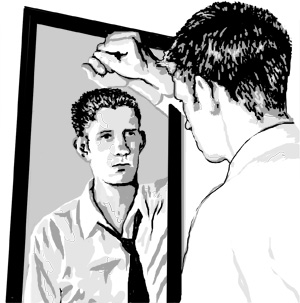
So what is Footsteps? Is it good or bad? Are they doing OTD Kiruv? What’s their agenda? What are they really like? The simple answer is that there is no one single Footsteps. It is not a person. It is made up of people, many different people. However, if you want to view it in a monolithic manner, I’d say the following. Footsteps is giant mirror being held up to the frum world, challenging us to look at ourselves. Who are we? What’s our agenda? What are we really like? Do we care about each member of our family and community, or only about our reputation, and our team? Before we look past the mirror and ask questions about those who are holding it up, I strongly suggest we look deeply in the mirror, and face ourselves, warts and all.

Monday, May 18, 2015

Place, Show, and Win- Why I'm excited to be part of Project Makom


I’ve been thinking about the reason that I had a panic-dream about a speaking opportunity that is about a month away. I have no problem doing things last minute. Heck, I thrive under that pressure. Back in  my college days, I was able to write a paper and complete a project two hours before they were due (I got a B on each, thank you very much). I love public speaking, and, on the rare occasions when I’ve had panic dreams, they’ve come the night before, rather than many weeks in advance. So why am I a little nervous about my opportunity to speak at the Project Makom shabbaton?

As soon as I heard about Project Makom, I volunteered. Having heard about, and witnessed the serious challenges involved in moving from one’s religious community, I was excited about the opportunity to be part of an organization that makes such a transition easier. Regardless of the destination of the person who chooses to leave the charedi community in which they grew up, it seems obvious to me that, we, both as individuals and as a community, should want them to land on their feet. As such, and I hope this is not too shocking, in some ways I see Project Makom and Footsteps as being two sides of the same coin, in that we both want to help former charedim transition to a healthy and productive life.

Which brings me back to my speech. What is it that I would like to say? Most obviously, while the people involved in Project Makom are, more or less, Modern-Orthodox (I wish we could move past labels), it is important that we recognize that we have much to gain, and not just give, by welcoming former charedim into our community. While there is much that is positive in the MO world, like all communities, it is far from perfect. To cite just one example of many, I have many times been moved by the warmth and passion that I have found when davening, or having shalosh seudos with various chassidic communities. It is my hope that by welcoming more people who come from chassidic communities into our community, that our davening and zemiros will get a much needed boost.

It is in thinking about the gains that both sides will make, that I start to get a slightly mischievous thought in my mind. Perhaps what we are really doing at Project Makom is not welcoming former chassidim into the Modern Orthodox world. Perhaps we are really all just joining together and going back to the roots of the chassidic world. A world where there is little need for hierarchy. A world where “B’chol drechecha da’eihu” is truly a guiding principal. A world where Jews of all types and stripes can learn, sing, and speak together. If that is what we are able to do, I am hopeful that HaShem, who is the true Makom, will bless Project Makom with success.