Thursday, March 3, 2016

Searching for Truth When Your Belief System has Fallen Apart- my talk at the upcoming Project Makom Shabbaton


Before I begin I want to say something, which as you will see, is actually very connected do what I will be discussing. Some, including Mindy and Allison, might think that I participate in  these shabbatons because I have something to offer you. The truth is, however, that I attend these shabbatons to gain inspiration. As silly as it might sound, you, and all the members of Project Makom are my heroes. Your passion for truth, your refusal to simply go with the flow, your need to question, understand, and seek, inspires me. In a world that was not an olam hafuch, you would be honored by the velt for being true Mevak’shei Hashem.


To begin, allow me to share with you part of the reason that the mission of Project Makom speaks to me. I myself have gone on my own journey looking for my own place in the world, and in Judaism, in fact, I’ve never finished my journey, and hope I never will. I was raised in a pretty typical Modern Orthodox family of the 1970s and 80s. My father, a”h, did not attend a yeshivah. In fact, he did not grow up religious. Although he developed a love for many parts of yiddishkeit, he never learned Hebrew or Aramaic and couldn’t learn (he did grow up speaking Yiddish, and spoke with my mother a”h in Yiddish to discuss things they didn’t want us to understand). We kept Shabbos, at least as well as we could without really knowing Hilchos Shabbos, and kashrus, but fudged it on occasion, for example, relying on a sketchy rumor that the local Dunkin Donuts was kosher. It was only later in my late teens and early twenties when I began to take things more seriously. In 1997, when I was 26, I switched from a kippah seruga kollel to one that was yeshivish. I soon followed in their ways, and started wearing a hat, although only on Shabbos. That year, for the first time, I ran into a religious question which challenged my understanding of Judaism. I was too scared to ask anyone how to deal with my struggles, as we are not supposed to have doubts, or so I thought. Years later, I asked someone knowledgeable, who gave me an answer which gave me yishuv hada’as. About five years ago, I went through a much more serious crisis. I was not sure that I was still a ma’amin. I was in chinuch, was married to one of the most sincerely religious people I’ve ever met, and had seven children. I decided that no matter where my search led me, I would not change my outer behavior. It was more important for me to protect my family, than to be myself (although I understand those who make different decisions). I wasn’t scared. I was terrified. Which brings us to the practical part of this talk.


Using the process of how I rediscovered my faith, although in a very different way than before (which is why my blog is called “Pesach Sheini) I will attempt to give very practical suggestions, which I hope will be of help.


1. Your struggles and questions are okay


Don’t beat yourself up for struggling or having questions. You are not  an apikores. You are not a bad person. In fact, you are doing what the founders of chassidus did. You are saying “I refuse to simply choose a derech that doesn’t fit me, just because I was born into it”. When the Kotzker was asked by his father why he had changed his derech, he pointed out that it says in Shemoneh Esrei אלקינו ואלקי אבותינו. First we have to make HaShem our God. Then we can connect to the God of our fathers. He was far from alone. I can literally share dozens and dozens of those who chose chassidus despite their misnagdish background, including Rav Leibele Eiger, whose grandfather, Rebbe Akiva Eiger you might have heard of. And it’s not just to chassidus. I can show you others who went the other direction, and even those who, gasp!, chose to become more “modern”.


2. There is no such thing as a bad question, although there are bad answers


Ask your questions. Do not think that any are bad, and must be hidden or ignored. They will bother you until you examine them. Don’t however accept “bad” answers. Some answers will simply be wrong or simplistic. Others might work for others, but not for you. Keep asking until you are satisfied by what you hear. Also, some questions can not be answered by an answer that will satisfy you. That’s okay. Better to be emes’dik, than to try and force yourself to believe something you know to be wrong. Which leads us to:


3. Know whom you should not ask


Some people are afraid of questions and doubts. Some are so scared that they attack those who ask these questions, so that they can avoid struggling themselves. I’m sure you’ve all met these people. Unfortunately some are teachers of Torah, or people who can have a lot of control over your community. Avoid discussing your questions with them. They can’t handle struggle, even though the Ribbono Shel Olam can.


4. There are many great resources out there


There are some brilliant talmidei chachamim and scholars who are very accessible and are happy to try and help you with your search. They can be reached in various ways, including in person, and by phone, email and social media. Yes, Facebook is a great resource for doing more than just posting pictures of what you had for lunch.


I reached out to many different people who were incredibly helpful (as well as some who were not). Some shared their own thoughts, others recommended books which were quite helpful.


5. Read, read, read


There are incredible seforim and books out there where many challenging questions are addressed. They are written by those they never told you about in cheder or Beis Yaakov; Rav Kook ztl, Rav Yosef Ber Soloveichik ztl, Rabbi Dr. Eliezer Berkovits ztl, and Reb Hillel Zeitlin ztvkl, to name a few. Zeiltlin by the way, was born into a chassidic family, lost his emunah due to some serious questions, and found his way back to frumkeit and chassidus, before being tragically murdered in the Warsaw Ghtto.


6. Be patient with yourself


It took me more than 1 ½ years before I started to truly believe. It could have taken longer. These things take time. There is no deadline.


7. Be willing to be a cholent


You don’t have to find the perfect community. In fact, there is likely no community that will truly be a perfect fit for you. That’s okay. It’s why my more liberal friends think I’m a right-winger and my conservative friends think I’m a kofer (I’m joking….kind of). I love certain parts of chassidus, which are part of my Avodas haShem. Other parts don’t speak to me. I appreciate the commitment to serious Talmud Torah which I see in parts of the yeshivish world, even while other parts of that world trouble me. And yes, I love the ideas of Modern Orthodoxy, even as I find too few in the community who strive to live up to those lofty theories. As Rav Kook taught, there is no approach that doesn’t have some emes to teach us.


The Meiri, who was a Rishon, noted that the tefillin that any of us wear are pasul according to every Rishon. Our tefillin  follow some shittos of one Rishon, and other shittos of other Rishonim. He then asks, how we can wear these tefillin if they are “pasul”. His answer is one you might expect from a Chassidic Rebbe, rather than a Rishon who was far from being a mystic. Rachmana Liba Ba’i, HaShem desire the heart. My beliefs and your beliefs might not be kosher according to, or perfectly fit in with, any one group, but they are most pleasing to HaShem, who desires our hearts.


Finally,


8. Not everything you believe can be publicly shared


The Rambam wrote more than the Mishneh Torah, even if some pretend otherwise. He wrote a complicated work of philosophy called the Moreh Nevuchim. Everybody from secular to Satmar, and from Reform to Reb Chaim ztl, think they know the “real” Rambam. Some say his philosophy was the real him, while others say he didn’t believe any of it, and would fit in perfectly in the charedi world. I won’t share my personal opinion, but, no, he wouldn’t fit into the charedi world.


There’s a reason nobody knows what he truly believed. In his introduction to the Moreh, he makes clear that he is going to hide his true beliefs behind all sorts of seeming contradictions. He knew that many of his generation could not handle his belief system, and tried to keep it hidden. Of course, it didn’t quite work, as they burned his books anyway.


You would be shocked to know how many things which many today call kefirah, were believed by the Rishonim. While those ideas can not be publicly expressed in some communities, I’m pretty sure the Rambam, the Ralbag, and Ibn Ezra were good Jews, and I’m willing to risk my Olam HaBa on them. My beliefs are complex and I have to keep parts of them away from most people. Not because they are kefirah chas v’shalom, but because most frum people don’t seriously study philosophy and are not aware of how many “kefirah’dik ideas, are totally muttar. There is no pesak in hashkafa. I discuss my ideas with those who can handle them. With others I’m guarded. Sometimes it gets annoying, but there is always a price we pay for being part of groups which can never perfectly reflect who we are (we also gain various things from not living alone, much more than we lose).
----------------------------------------------------------------------------------------


In conclusion, be true to yourself and do not fear the challenging journey ahead. It won’t always be easy, but with siyata dishmaya, you will find your makom.

Tuesday, March 1, 2016

Letting God In- Getting Real with Our Avodas HaShem


[This is a followup to my last post where I suggested that, too often, God is absent from our lives.]


It is one thing to write a manifesto suggesting that there is a problem in (our) Orthodox world. It is entirely another to suggest a solution, particularly when I myself struggle with the very same problem. Diagnosticians are a dime a dozen, while those who can cure what ails us are much more rare. I am not foolish enough to think that I know the way, or even ways, to make God more of a reality in our lives. Still, I write what follows to get the conversation started, with the hope that those who have more to offer will join the conversation, and make suggestions. What follows, in no particular order, are some things which I have found useful, or which I hope to use, in trying to develop a more real, and deeper relationship with God. There is nothing complex or creative that I am going to say, but sometimes simplicity is a better route.


Baruch A’TA Hashem


Shmuel Bergman said “We pray out of belief, but we believe out of prayer”. Tefilla is an opportunity for us to deepen our belief. Through it we realize how God cares about us, and our dependence on God. We also gain something else. We go from talking about God, as we do in the Shema, or when we study theology, to speaking to God, speaking as we would do to a spouse, friend, or anyone we love. Each time there is a place in tefillah where we address God directly, as we do, for example, in the first part of most berachos, it is a chance to speak directly to God. The more we speak to God in the second person, the more He goes from being a thing, or an idea, to being someone to whom we relate.


Hisbodedus/speaking in your own words


This photo, which I shared in my last post, is one of favorites. Although I’ve rarely had the guts to stand in the woods and try to speak out loud to God, I’ve long felt that nature offers a unique opportunity to feel God’s presence. What I do more often is to speak, using my own words and in English, directly to God. While it often involves asking for things, there are many times where I simply share my thoughts and feelings, especially gratitude, fears, and desire to truly experience God’s presence. Speaking in my native tongue with my own words allows me to connect with God in a direct, raw, and unique way that is different from what I experience during tefillah.


Talmud Torah


It often seems that for men in our community, only gemara and halacha are considered serious talmud Torah. It is rare to see a chavrusa where Ibn Pakuda’s Chovos HaLevavos, Ramchal’s Derech HaShem, the Piaseczna’s Bnei Machashava Tova, or the Alter of Navardok’s Madreigas Ha’Adam is learned. To the degree that they are studied, it is generally done informally. Take the time to study the siddur, and treat it as seriously as any other text composed by the chachamim. The Avudraham is an excellent sefer to study to more deeply understand the goal of each part of tefillah.


Role Models


Look for role models who live with God in a serious way. It doesn’t have to be a gadol, teacher, or famous person. Find somebody who is real. If you don’t know anybody who fits that category, learn the Torah written by such a person, and/or learn about their life, whether or not they are still living. For me, by way of example, although I never merited to meet him, anything I have read by or about Rav Yehuda Amital zt”l deeply affects me, and causes me to want to grow more real in my Avodas HaShem. His life serves as a high target that I will never reach, but also as one that causes me to strive for more than I otherwise might do.


Pause and slow down


This can be challenging for me, but I try and pause before saying a beracha, and think about what I’m about to say. I also try to literally pause, standing still, and even closing my eyes when saying the beracha. When I do this, it goes from being quickly mumbled words, to speaking to God.


Peirush HaMilim


Know what you are saying. If your Hebrew is not strong enough, use a Hebrew-English siddur. You can’t meaningfully speak to someone if you don’t know what you are saying.


Relationship, not rulebook


Try not to think in terms of “Am I chayav?” Or Is this assur?”, although for sure, one needs to know these things to properly follow halacha. In our relationships with people, we focus on being loyal, or loving, not on being yotzei an obligation. I try to think of my relationship with God in the same way. Our chachamim compare Bnei Yisrael’s relationship with God to that of a husband and wife. We gain a lot if we think in those terms, as opposed to legalistic ones.


Don’t work alone


Work with others to create this reality. If possible, daven at a shul or minyan where the davening is conducive to serious Avodas HaShem. For me, a slower pace, beautiful singing on Shabbos, and God-centric derashos and shiurim matter. If you don’t have options, try and sit in a part of the shul where people don’t converse during davening.


If possible, and this is one of the places where I have not yet succeeded, start a chaburah, mussar-vaad or the like. Join with other people to work on avodas HaShem by focusing on a particular sefer. For some it will be a mussar sefer, while for other it will be a sefer from the Rishonim, or chassidus. Which brings me to…


Listen to your neshama


Find the approach that works for you. Some approaches to Avodas HaShem, and language used to discuss it (including mine) might seem too light or fluffy for you. Find the one that works for you. There is no one-size-fits-all approach in Avodas HaShem. When you experience the approach that is right for you, you’ll know it. Don’t let anyone dictate to you how it “should” be done. Thank God, there are many legitimate approaches from which to choose.


----------------------------------------------------------------------------------------------------

As I mentioned in the introduction to this post, I claim no expertise in this area. I am a searcher, and some of what I described might speak to you. If you have other suggestions, or think some of my ideas are mistaken, please share your thoughts.

"It is one thing to write a manifesto suggesting that there is a problem in (our) Orthodox world. It is entirely another...

Posted by Pesach Sommer on Tuesday, March 1, 2016

Tuesday, February 23, 2016

Wherever We Let Him In- Bringing God back to Orthodoxy


מכריז רבי ינאי חבל על דלית ליה דרתא ותרעא לדרתא עביד


RRav Yanai proclaimed “Woah to the one who lacks a courtyard, but builds a gate for the courtyard”. (This refers to one who learns Torah but lacks Yir’at Shamayim)


Orthodox Judaism is drowning. We are drowning in Torah, mitzvohs, and halacha. Drowning in mutar and assur and chayav and patur. Drowning in gemara, Shulchan Aruch, and the Ketzos. Orthodox Judaism is drowning in shtreimlech, black hats, kippot srugot, and sheitels. In 30 minute shachris, daf yomi, and dress codes. We have so many mitzvot, so many ways to be an Orthodox Jew, and more Torah learning than at any time in our history, but we don’t have God. We do mitzvos without thinking of the M’tzaveh, and learn Torah with nary a thought of the Nosein HaTorah.


My community, to give just one example, is a model of talmud Torah, and tefillah. There are multiple daf yomi and shavua yomi shiurim. So many men and women learn Torah on a daily basis, and multiple batei midrash are full each night. We have numerous shuls with shachris, mincha, and maariv available during every permitted time to say those tefillos. Still, I have never heard of a local shiur in how to daven, or in how to relate to HaShem. In this we are far from unique. How many communities have shiurim in Derech HaShem, chaburahs in Bnei Machashava Tovah, or Shabbos derashos which talk about our relation with HaShem?


Have we, and at least equally important, our children, dwelled on the Rambam’s description of Ahavas HaShem, deeply studied Chovos HaLevavos, or given thought to the fact that all of the sheish mitzvos temidiyos, the six mitzvos in which we are obligated at all times, deal with how we relate to God?


We speed through pesukei d’zimrah, without allowing the words of the Psalmist to help prepare us to stand before our creator. When we sing Lecha Dodi, do we mean it, or feel sadness at the end of Shabbos when we lose our Neshama yeseirah?
I saw a poster last night about a new shiur in Hilchos Tefillah. Quoting the Chafetz Chaim, and Rav Chaim Kanievsky, it asked “How can we daven, if we don’t know how to daven?”. However, the question, in relating it to halacha, is mistaken. Halacha teaches what to do during davening, not how to daven. Indeed, how can we daven if we don’t know how to daven? When we encourage our children or students to daven with kavanah, what do they think we mean? Even if they understand, have they ever truly learned how to daven?


While it is true, at least according to Rav Chaim Volozhin, that, when we are learning Torah, we should concentrate on the content of what we are learning, and not think about HaShem, do we do so beforehand or after we are finished? Do we learn Torah facts, or, as the gemara says in Maseches Shabbos, learn about, as it were, the soul of God?


It is said that the Kotzker Rebbe once asked his chassidim where God can be found. “Everywhere” they answered excitedly. “No” he replied. “He can be found wherever we let him in.

Are we truly letting him in?

To read my suggestions for how to work on Avodas HaShem click here

"Orthodox Judaism is drowning. We are drowning in Torah, mitzvos, and halacha. Drowning in mutar and assur and chayav...
Posted by Pesach Sommer on Tuesday, February 23, 2016

Wednesday, February 10, 2016

Unmaking of a Godol?- what those who we most venerate says about who we are


Let’s be honest. Terms like “gadol” and “tzaddik” are amorphous and hard to define. I would go so far as to say that our use of these terms says at least as much about ourselves, as it does about those to whom we assign these titles. Sometimes these terms speak of what we value; Torah scholarship, kindness, and other abilities and traits. Other times, these titles expose a darker side to the world, as we show how much we can tolerate certain faults and flaws, without removing someone from the pedestal on which they’ve been placed.


A few weeks ago, Rav Yisroel Belsky z”l passed away. A number of my friends posted about him in very positive terms. Being that I did not learn in Torah Vodaas, and was only familiar with some negative issues, I posted asking people to tell me the positive things they knew about him. I discovered some wonderful things about him. I was told about the tremendous chessed he did for so many people, including some, who many other people would not help. There were people who spoke about him welcoming people into his home, when nobody else would do so. The stories were truly beautiful.I heard about his tremendous genius, and how he knew a lot about science in addition to much Torah. I was moved by what I heard. Still, I couldn’t get the other things I already knew out of my head.


I am not writing to judge Rav Belsky who, like all of us, was human. We like our heroes to be perfect and villains to be nothing but bad, but that’s not how it works. He is no longer alive and any judgement will come from God, and not me. What I can’t get out of my mind is how many in the frum community can use the terms “tzaddik” and “gadol” for someone who did some things which can not be defended. I’m not going to list everything that he did, but his involvement with two generations of Kolko abusers will suffice. Even if one will argue that Rav Belsky did not know the full extent of what abuse the senior Kolko perpetrated, or that, given the times, he was not aware of the consequences, the nasty attack on a prominent family in Lakewood, when their child was abused, can not in any way be excused. Even when many in Lakewood, apologized to the family who they had driven out from the community, and welcomed them back, Rav Belsky never backed down to his dying day, even though the abuser pled guilty in court, and is sitting in jail.


Again, I will leave the judgement of how to view this complicated man, who did so much good, and some pretty serious bad, to God, but what of the community that venerated him? There are all sorts of small things that might have gotten him kicked out of the gadol and/or tzaddik club. Imagine the uproar had he said that bnei yeshiva in charedi yeshivas in Israel should serve in the army. What would have been said in the frum periodicals if he had started a college program in the yeshiva? He might even have been attacked if he was seen drinking the so-called “chalav stam”. I am not suggesting that he be treated without respect for the many good things he did. Rather, it just seems to me that terms like gadol and tzaddik, are, or at least should be, reserved for the select few who are role-models in the truest sense of the term.


Of course, this is not just an issue that connects to Rabbi Belsky. The Satmar Rebbe is treated with tremendous respect by his community, and by some from outside of it, despite having protected abusers from within Satmar. What does it say when a misheberach for Israeli soldiers would mark him as treif, but protecting Weberman and others does not? If we call rabbis who protect abusers by titles which suggest that they are the most venerated members of our community, what message are we giving to the victims of abuse?


A number of months before Rabbi Belsky passed away, Rav Aharon Lichtenstein zt”l passed away. As a true gadol ba’Torah, there were many stories about his brilliance, knowledge and hasmada. There were also many story of his tziddkus; stories when he was kind in ways beyond what we would expect, stories of how every person he met was treated with kindness, dignity and respect. There was one thing that I didn’t hear discussed at the time, but which I will never forget. When it became clear that Rav Motti Elon, a prominent rosh yeshiva in the Dati Leumi  world, had been guilty of abusing students, Rav Aharon did everything within his power to see that Elon was removed from his position of power. This despite the fact that Elon was not involved in Rav Aharon’s yeshiva. He suffered many unfair attacks from Elon’s apologists, but Rav Aharon would not be stopped. His actions conveyed the message to those who had been abused that they mattered to him, and that their pain was his pain.

I don’t use words like gadol and tzaddik lightly, but when I do, it is for those who live up to the ideals of the Torah, in the truest way possible. Rav Aharon was a gadol and a tzaddik. When we think about who deserves these titles, we should have role-models like Rav Aharon in mind.

"Let’s be honest. Terms like “gadol” and “tzaddik” are amorphous and hard to define. I would go so far as to say that...

Posted by Pesach Sommer on Wednesday, February 10, 2016

Thursday, January 21, 2016

Kiruv Uber Alles?-when the end does not justify the means


[This is the third, and probably final post on kiruv. To read the other posts, click here, and here.]


It was a scary moment when I realized the power I have as a teacher. I was teaching a class of intelligent high school students. The kind of kids who asked serious questions, and wanted serious answers. At some point, I passed the test. They saw me as the type of rabbi who wouldn’t give them silly, unthought-out answers. They came to believe that I was different from many of their other teachers, whom they thought didn’t have serious answers. One day it hit me. I had reached the point that for at least some of them, I could could push off some of their religious doubt, without answering their questions. All I had to say was something like “I’ve spent a lot of time working on that. It’s too complicated for me to explain, but trust me that your question can be answered”. Of course, I never did that, nor would I ever do that, but just the fact that I could have that kind of power over someone’s life, scared me. What terrifies me is that some in the kiruv world, have that kind of power, and take advantage of it.


The question needs to be asked. Is “making someone frum” (to use a rather vulgar phrase) important enough that it justifies dishonest or even immoral behavior? In too many kiruv situations the mekarev seems to think that ends justify the means. In this post, I will attempt to cite some examples, follow with what may be said in defense of these practices, and explain why this defense is incorrect. Finally, I will describe an even more heinous outcome of the idea that doing kiruv is of greater worth than other important values, before describing a better approach.


For those who do kiruv, one of the big questions is how to get a potential ba’al teshuva through the door. While there are various approaches that are used, one approach that one sees involves bait-and-switch. Offering a trip to Israel with no suggestion that it is for kiruv purposes, having a program that seems to not have any religious content or desired goal, and by far the most dangerous example, using alcohol to attract college students (many of whom are underage) are among the ways that are used.


Once the person walks through the door, how does one introduce them to Judaism? Is it about teaching Torah, or are all sorts of “proofs” offered? The reason that these “proofs” seem to work is that they are often used to attract those who are not so intellectual, and are often unaware of the reasons why these ideas are faulty. While it seems to me that some of the mekarvim themselves might actually be unaware that the ideas that they are teaching don’t work (which is problematic enough), it seems that some are aware but have no problem misleading people in order to “save” them. Examples of this approach includes the so-called “Kuzari proof” (which should not be confused with what Rebbe Yehuda HaLevi actually wrote and meant), and the Torah Codes, which supposedly prove that only God could have written the Torah.


A third example is what I discussed in my first post on kiruv, where the complexities, weaknesses and flaws of the frum world are hidden, so as not to be discovered until buy-in has occurred, and it is harder to act on the discovery.


So why do these things occur, and why do some mekarvim see them as acceptable? I suspect that one answer would be that when you are trying to save someone’s life, you do whatever is needed in order to do so. In this analogy, causing someone to become religious is so essential that it can be accomplished by any means necessary. How do those of us who see God and Torah as truth respond to this idea? Surely we can not deny that there are ideas that are found in rabbinic literature which seem to equate saving someone’s soul with saving their life. Some sources seem to go further placing it above saving their physical life.


One possible response is that in this case, the analogy does not work. While one could argue that saving a life with any amount of deception is acceptable, this would only be true if one is truly saving the life. If it is only doing so temporarily, with the strong possibility that death will occur when the deception is discovered, then kiruv that is done in a manner that makes a return of the ba’al teshuva to secular life likely, and even more with an antipathy for Judaism, can not be justified. While I lack statistical evidence to prove that this is occurring, anecdotal evidence suggests that many ba’alei teshuva are becoming what is known in Israel as “chozrei b’sh’eila”, that is returning to secular life, often with a negative feeling for the frum world.


However, I think there is a more basic response. It can not be that a God whose name is Truth can be served through dishonesty and subterfuge. It is not possible that a religion that speaks of free will, as an essential component, can be served by misleading people and stealing their autonomy. A kiruv done with a belief that the ends justify the means, is simply not Jewish.


Which leads me to what is, perhaps, the most disturbing part of this approach. Some very troubled and immoral individuals have been protected due to their being master mekarvim. In the not so distant past, this approach kept Baruch Lanner involved with NCSY when it was very clear that he should not have been around teenagers, and, as has come to light recently, was used by a well known rabbinic figure (as well as others) to protect Marc Winiarz (who later became Mordechai Gafni), so as to not ruin his promising rabbinic career. How many people would have been saved from these horrible individuals, if kiruv had not been placed above so many essential values? To cite another somewhat less distressing example, how is it that Yosef Mizrachi is still treated with respect by people who quote his overinflated claim of having gotten tens of thousands of people to become frum? Again, do heinous comments about kedoshim from the Shoah, Israeli soldiers who made the ultimate sacrifice, and so many others, suddenly become acceptable if they are said by someone who is supposedly doing kiruv?

One final series of questions must be asked. Am I against kiruv? Am I denying that there are some who do kiruv the right way? If not, what is the goal of these series of posts? To answer, allow me to tell you about a bar mitzvah I attended this past Sunday. The father of the bar mitzvah boy, who is a friend of mine, runs a kiruv-style shul. At the bar mitzvah, I saw first hand what he does. He teaches Torah to anyone who is interested regardless of level of observance. He is welcoming, warm, and caring. He is there to have a real long-term relationship with the people in his shul. Equally important, he is real. As much as he has guided them, he has learned from the people around him. While my approach to, and venue for, teaching Torah is different, we are both doing something similar. We are sharing the Torah which we love, in a way that maintains the dignity and autonomy of those whom we teach. Call it it teaching, or call it kiruv if you’d like, but if that is kiruv, it is how kiruv needs to be done.

"It was a scary moment when I realized the power I have as a teacher. I was teaching a class of intelligent high school...
Posted by Pesach Sommer on Thursday, January 21, 2016

Thursday, January 14, 2016

Dough as I Say- the harm being done by some funders of kiruv programs


[This is the second in a series of posts on some of the problems with how kiruv is done. To read the first post, click here.]


Several years ago, I spoke with an advisor from NCSY after a shabbaton. When asked to reflect on the weekend, she told me that while there had been some positives, she was upset that there were nearly 500 kids who attended. Noticing my surprise that this was not a good thing, she explained that there was not nearly enough space, advisors and programming to accommodate that many attendees. When pressed to explain why she thought space had not been limited beforehand, this advisor, who knew the workings of that NCSY region, explained that it was to impress funders, who wanted to see large numbers.


This is just one example of what I consider to be a troubling phenomena; funders of kiruv pushing for high numbers, at the cost of an approach that treats each person as a, well, person. This approach is not only dehumanizing, it also makes it much less likely that the potential ba’al teshuva will have a real relationship with their mekarev, and thus, will have less guidance as they become more observant. Furthermore, it rewards those mekarvim who are willing to buy into this approach, over those who want to do things the right way.


Perhaps, one might object that I am telling people what to do with their money, but I think this is more of a case of giving sound business advice. At the end of the day, a good and ethical businessman wants to produce a good product, and would not sacrifice quality for quantity. This approach might lead to less profits in the short term, but leads to much greater success in the long term. From a business perspective it is true that one can quantify how many people attend a shabbaton, or how many college students a mikarev speaks to each day, but that’s just it. Effective and sincere kiruv has nothing to do with numbers. the goal isn’t, or at least, it shouldn’t be, to reach as many “customers” as possible. The goal is to help people improve on their relationship with haShem, which is an approach which is not limited to ba’alei teshuva.

Objects can be mass-produced. Sincere ovdei HaShem can not. Good mikarvim, and those who fund them, need to know and appreciate the difference.

"Several years ago, I spoke with an advisor from NCSY after a shabbaton. When asked to reflect on the weekend, she told...

Posted by Pesach Sommer on Thursday, January 14, 2016

Wednesday, January 13, 2016

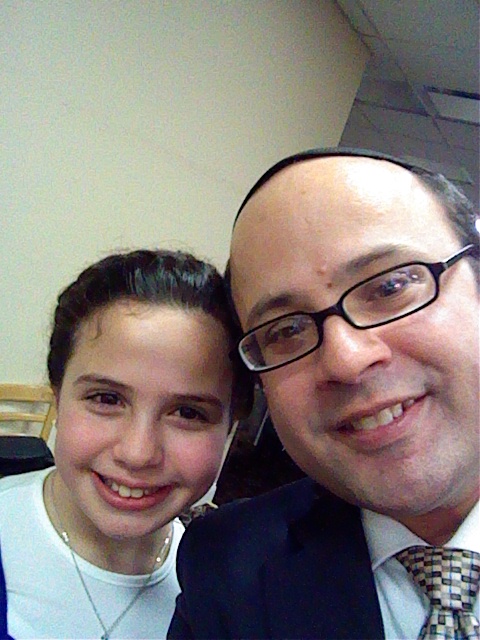
To Maayan on Becoming a Bas Mitzvah


Maayan,

I don’t know if you remember this, but I always speak directly to the one having the bar, or in this case, bas mitzvah, and allow everybody else to listen.

Being that you were born on Rosh Chodesh, you chose to speak about Rosh Chodesh. I’d like to speak to you about two other words which share the שורש of ח.ד.ש.

Chadash-

Tonight, everything is new and exciting. Each mitzva you do beginning tonight will feel exciting as you think about the fact that you are doing it as a metzuvah, one who is commanded, for the first time. Over time however, that natural excitement will fade, and there is the risk that the מצות will start to feel boring or stale. There is also the challenge of having  to do the mitzvos as one who is commanded, rather than by choice. One of the challenges we all have is to try and make each mitzvah that we do exciting, meaningful, and something we want to do. Although we won’t succeed each time, with real effort we will often manage to succeed.

In Shemos 19:1 we read
בחֹדֶשׁ הַשְּׁלִישִׁי לְצֵאת בְּנֵי-יִשְׂרָאֵל מֵאֶרֶץ מִצְרָיִם בַּיּוֹם הַזֶּה בָּאוּ מִדְבַּר סִינָי:
(א) ביום הזה - Rashi
בראש חודש. לא היה צריך לכתוב אלא ביום ההוא, מהו ביום הזה?
שיהיו דברי תורה חדשים עליך כאלו היום נתנו:

Rashi explains that the Torah used the word הזה rather than ההוא to teach us that we should try to make each day of learning (and I would add mitzvah observance) as exciting as the day we received the Torah. The more you learn about each mitzvah, the more you strive to understand the details as well as the Taamei HaMitzvos, trying to understand the reasons behind the mitzvos, the more you will keep them fresh, exciting and new.

Chiddush-

When a child is born we give the parents the beracha that the baby should be raised to Torah, chuppah, and maasim tovim-  The wish is not just that you learn Torah, but also that the learning should be serious and passionate. Don’t be satisfied to just understand it basically. Look deep inside each thing you learn. Search inside it because each word of Torah contains so much within it. There is also something to be learned from the Torah you learn, including your davening. Aim to find something new each time you learn, just like you are doing something new bayom hazeh.

Maayan, you are blessed to have a mother who is a role-model for you in this regard, as well as so many others. Mommy’s commitment to Torah and mitzvot, her love and her hunger for learning are one of the first things that caused me to fall in love with her. Each time I see her light the Shabbos candles, I am in awe, and, I must admit, a little jealous. I wish I could do mitzvos with same commitment and energy that mommy does them. Mommy listens to shiurim while preparing food for Shabbos, and finds time each week to learn with her chavrusa from Partners in Torah.

You are also blessed to have siblings who love you and from whom you can learn a lot. Since you are a woman, I particularly want to mention Chavi who sets an amazing example for what a commitment to Torah, mitzvos and a relationship with HaShem looks like.

I am so happy that you are surrounded by so many people who love you, including family and friends. Still, I am a little sad that my parents are no longer with us and able to be here. I know they’d be very proud of you. I am happy for you that you have such wonderful grandparents as safti and grandpa. who both model for you a commitment to growth, learning, and trying new and challenging things. While I am glad that you are surrounded by many relatives, including uncles, aunts, and cousins, I know that your aunt, uncle and cousins in Israel love you so much and wish they could be here to celebrate with you.

Maayan, you are bright, creative and have a lot of passion. You have a commitment to justice, and a big heart. I look forward to watching you bring these traits to your observance and learning of Torah, and to your performance of mitzvos, and most importantly, your relationship with HaShem.

Mazal tov!