Wednesday, January 6, 2016

Educators or Salesmen- What is the goal when it comes to kiruv?


One Friday night several years ago, I walked into shul and realized something was going on. The sanctuary was more crowded than usual, and there was a large group of casually dressed college-aged students sitting at several tables. I soon realized that there was a kiruv shabbaton going taking place in my community, and that they had decided to daven with us on Friday night. As Kabbalas Shabbos started, I became aware that we would not be davening in the same way we daven each week. The chazzan, who was part of the shabbaton, sang a great deal, and even started dancing at the end of Lecha Dodi. I remember wondering whether the young men who were attending the shabbaton knew that this was not the typical way we davened each Shabbos, or, quite honestly, any other Shabbos.

I noticed something else that night. As davening continued well past its usual time, a few locals started getting a bit chatty. A counselor from the shabbaton came over to one man and asked him to stop talking, explaining that it would look bad to the shabbaton attendees. It wasn’t until later that I thought about this exchange. Why was the counselor so worried that davening would look “right” to the attendees? What might have happened had it became clear that some people talk during davening?

Over the past few years, I’ve become aware of a certain phenomenon. I’ve met and spoken with a number of baalei teshuva who are experiencing some degree of “buyer’s remorse”. As they’ve discovered that the religious world is more complex than they were taught as they were becoming religious, and as they’ve met our community’s knaves as well as its heroes, they have become somewhat disillusioned. This is not what they thought they were getting when they signed up. For many of those who attended yeshivahs and seminaries in Israel, their formative frum experience involved only being around very inspiring teachers and communities. For some others, they were given a less than clear picture of the complexities of the observant world, leading  some to feel that the one who was mikarev them was more of a salesman than a teacher.

What would be the results if kiruv programs allowed people to see all parts of the frum community, the good, the not so good, and, yes, the ugly? What would be the effect of a Shabbos meal without planned talking points, and where people talked about what they usually discuss, and not what they think the guest should hear? While some people might come away a little less inspired, this approach would allow people to make a real choice about the world that they are choosing. Additionally, this would have the result of fewer people feeling that they were misled by the whole kiruv process. If the goal is not to find new recruits, but rather to educate people about their heritage, an honest and open approach seems like the better way to go.

[I originally wrote this post several months ago, but decided to not publish it. Now, with kiruv back in the news, due...

Posted by Pesach Sommer on Wednesday, January 6, 2016

Tuesday, January 5, 2016

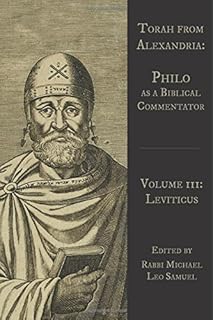
Torah and Philo-sophy: A review of Torah from Alexandria- Philo as a Biblical Commentator


I’m thinking of a Jewish thinker who showed -some would say, tried to show- that the Torah and Greek philosophy could be reconciled. He lived in Egypt and interacted with the leader of his country. While many would assume I am thinking of the Rambam, I am actually thinking of Philo of Alexandria, who lived more than a millennia before the Rambam, and who, despite being less well-known to many Jews of today, wrote many works where he attempted to show that following the Torah could be reconciled with the prevailing ideas of his time, in a manner that would not be repeated until the time of Rav Saadiah Gaon and the Rambam.


While there are many reasons why Philo and his thought are not known to many Jews who are familiar with Jewish philosophy, among the main reasons are that Philo’s works were written in Greek, and that his ideas are spread out in many different texts. In Torah from Alexandria- Philo as Biblical Commentator, Rabbi Michael Leo Samuel has eliminated those challenges, and offers many in the Jewish world their first opportunity to study Philo’s ideas. In this work, published by Kodesh Press, Samuel has collected Philo’s thoughts from his many works and organized them according to the books of the Torah. To date, three volumes have been released, covering Bereishis, Shemos, and Vayikra.


While this format has the advantage of creating an easier entry point for the non-expert to study Philo’s thought, it is far from the only advantage to this new and creative work. Samuel begins with a fascinating introduction which includes biographical information about Philo, his general philosophical approach, reasons why Philo was not studied by the rabbinic sages of the Talmud and the Middle-Ages, and much more.  In the main text he includes Philo’s thoughts on each verse, with footnotes which list the original source of each idea. There are also notes interspersed within the text which show places where Philo suggested ideas similar to those of the Chachmei HaShas, the Zohar, Rishonim, Achronim, and more. I found the parallels to ma’amrei Chazal particularly fascinating, as it is not clear whether Philo actually spoke Hebrew, or whether he interacted with the great rabbinic sages of his time. To cite just a few fascinating examples:


  • Philo offers what, at first, appears to be a fanciful explanation of the ישראל suggesting that it combines the words איש ראה א-ל, the man who “saw” God. However, this same explanation is suggested in Seder Eliyahu Rabbah


  • Another example, found in this week’s parasha, for the plague of ערב, commonly understood as wild animals, is explained by Philo as a type of fly. A similar idea is suggested by Rebbe Akiva in Shemos Rabbah.


  • When it comes to the Mishkan, Philo suggests that the commandment to build the Mishkan came before the sin of the Cheit HaEigel, and offers an explanation that is quite similar to that later offered by the Ramban, suggesting that the Mishkan was a portable Har Sinai.


While I can not confirm that the translations are accurate, being that Greek is, well, Greek to me (I’m sorry, couldn’t resist), Samuel’s scholarship and breadth of knowledge leads me to believe that he has done a careful job in this area as well.


Torah from Alexandria will be of great benefit to anyone who is curious about Philo’s thought, those who are interested in Jewish philosophy (a comparison with the Rambam would be an interesting endeavor), or for the person who is looking for a new and unique way to study the Torah. Once again, Alec Goldstein of Kodesh Press is to be commended for making a quality work of Torah scholarship available to the English-speaking world.


"I’m thinking of a Jewish thinker who showed -some would say, tried to show- that the Torah and Greek philosophy could...

Posted by Pesach Sommer on Tuesday, January 5, 2016

Thursday, December 17, 2015

Guidance for the Perplexed? - Does the Orthodox community offer help to those who are struggling with religious beliefs?


What is Orthodox Judaism?


If it is a sociological group, a club of sorts, then we can make any membership rules we want. Want to join? Believe what we do, think as we do, or you are not welcome. If however we use the term Orthodox Judaism to describe a (the? the best? the only? -as some might say) way of being Torah observant, than what is our responsibility towards those who want to be part of that world, but struggle to accept or believe some some aspects of our belief system?


In a recent article, Rabbi Francis Nataf wrote about the things that he admires about Open-Orthodoxy. Whatever one thinks of his article, he got me thinking about one particular thing that I admire about the OO world. Many of the detractors of the OO world have suggested, basing themselves on the Rambam and others, that certain theological statements made by OO rabbis are out of the pale. There are, they insist, certain things that Orthodox Jews must believe. While the detractors might be correct, even if we haggle over the particulars, there is one thing that they almost never seem to do; offer meaningful answers to people who are struggling to accept certain Orthodox beliefs. “You are out, while we are in” they say, seeming to not care about (or is it not knowing how to answer?) the questions of those who are struggling.


What do we do with our religious struggles and doubts? What happens when, despite our best efforts to accept established doctrine, we are unable to do so? Can one be a believer while simultaneously accepting some ideas that conflict with traditional theology? These are tough questions to answer, and those of us who have gone through periods of religious struggle, not only search for answers, but also must think about which ideas that might seem true, can also be expressed publicly.

Those within the OO world take those who are struggling with religious doubts, as well as their questions, seriously. They recognize that various aspects of the modern world make it difficult to accept claims that seemed obvious in earlier times. Whatever one thinks of their answers, it’s hard to not admire the sense of עמו אנכי בצרה, I am with you in the pain of your struggles, that comes from the OO rabbis. While I am sure that those who oppose them care about their fellow Jews, their lack of putting forth other answers is, at the very least, curious.


At the same time, I wonder whether attempts to publicly wrestle with these questions can be productive. Almost every time an attempt was made by an Orthodox thinker to spell out some sort of theology or approach that might make more sense to the modern perplexed Jew, the result led to its writer being “expelled” from the orthodox community. Whether it was Louis Jacobs or Tamar Ross and Torah MiSinai, or Eliezer Berkovits, and his approach to halacha, to name just a few examples, their approach to various aspects of Torah were found to be unacceptable by members of the Orthodox world.  Courageous answers which push at the edges of traditional belief, even if ever so slightly, arouse tremendous defensiveness and pushback.


I believe that the Rambam in his introduction to his Moreh Nevuchim warns us about the dangers of espousing beliefs that will be difficult for the community to accept. There he says that his work will contain seeming contradictions, and that he will not help resolve them. He further says that he leaves it to the intelligent reader to figure out what he truly intends. The Rambam seemed to believe that some of his views needed to be kept secret in order to avoid communal reproach.


So where does that leave the Jew is struggling to believe? Perhaps, as I discovered when I myself was struggling, the questioner has to seek out learned and scholarly individuals who are willing to privately suggest that there are more nuanced approaches to Jewish theology than the commonly accepted ones. There are great thinkers, including some from the charedi world, who while outwardly professing to believe that which their community thinks is necessary, privately are much more broad than their congregants, followers, or students might realize. While it might be unfortunate that these discussions can not take place more publicly, those who are questioning should not despair, and realize that they need not go it alone.

"What is Orthodox Judaism? If it is a sociological group, a club of sorts, then we can make any membership rules we...

Posted by Pesach Sommer on Thursday, December 17, 2015

Tuesday, November 24, 2015

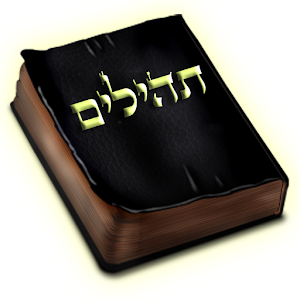
Some Thoughts on Tachanun, Tehillim, and Tefillah


I have to admit that until recently, I was one of those people who was happy when I got to skip Tachanun. Whether it was a newly married man in shul, an Erev Rosh Chodesh, or even, in a shtiebel, when it was the Yahrtzeit of some chassidic rebbe, I was far from disappointed when I got to avoid saying Tachanun. Recently that has changed (well at least partially, as the “Long Tachanun” is still a work in progress).


As I have been dealing with some challenges in my life, the beginning of Tachanun which is basically the 6th perek of Tehillim, has been one of the most important parts of davening for me. As I read the words of the Psalmist, as he cries out to God to answer his prayers, I feel a sense of relief as I find words that express so strongly what I am feeling, and struggling to express. During the past two weeks, my connection to these words has become even stronger.


Several weeks ago, I began studying Rav Elchanan Samet’s Iyunim B’Mizmorei Tehillim (which is based on his shiurim on the VBM, which have been translated into English). Rav Samet, who teaches at Yeshivat Har Etzion, explores a number of perakim from Sefer Tehillim, and analyzes them, not only with the eye of a rabbi reading a holy text, but also as a scholar with a deep and profound understanding of literature and poetry. His chapter explaining the 6th perek of Tehillim gave me a much deeper understanding and appreciation of the psalm, as, for the first time, I understood the structure of the perek, and the message that each section contained. Now, as I say these words twice each day, I feel an even greater connection with the message.


All of this has me thinking not only about tefillah in general, but specifically about Tehillim. I have never understood why Tehillim is recited, almost like a magical incantation, when someone is sick. Additionally, never having formally studied Sefer Tehillim, I never connected with its ideas and messages. As I think about this, I feel frustrated how the study of what is not only a sefer from Tanach, but also a work whose words make up so many parts of the siddur, is not taught in most schools. How can we hope to have any kavanah as we pray, if we don’t understand what we are saying? When I say understand, I don’t only mean the meaning of the words. Tehillim is poetry rather than prose. What meaning can it have for us without, at least, a basic understanding of poetry?
 
I know that I have a lot of work ahead of me. So far, I have not worked on any other section of Tehillim that is part of tefillah. Still, I am excited for what lays ahead. If I have come to identify so strongly with a part of davening which I always hoped to avoid, I am hopeful that more effort will lead to an appreciation of other sections as well. If what I have written speaks to you, I would encourage you to join me in studying Sefer Tehillim, Rabbi Samet’s sefer, and other parts of tefillah.


"I have to admit that until recently, I was one of those people who was happy when I got to skip Tachanun. Whether it...

Posted by Pesach Sommer on Tuesday, November 24, 2015

Tuesday, November 10, 2015

Unhealthy Obsession- Gil Student's RCA Fiasco


I hesitate to write this, and it is with a sense of regret that I do so. Rabbi Gil Student is a talmid chacham and someone who has helped spread Torah, both through Torah Musings, as well as through articles he has written, and books which he helped publish. I have personally gained a lot from many of his writings. He is a man of integrity and yiras shamayim. Still, in what I can only describe as his obsession with pushing Open Orthodoxy out of the door of Orthodoxy, he has crossed the line of propriety and judgment.


Nearly two years ago, I reached out to Student in the hope that, as someone who was a moderate thinker in the Right-Wing Modern Orthodox camp, he could help try and bridge the chasm that was growing between the MO and OO worlds. He made it clear that not only was he not interested in closing the gap, but that he wanted to do the opposite, and see that the OO world would be clearly seen as being outside of  the world of Orthodoxy. As disappointed as I was, I saw his decision as regrettable, but not severe enough to change my view of him as a moderate thinker who ought to be speaking for his community.


Recently, as Rabbi Avraham Gordimer became the self-appointed, and seemingly single-minded, critic of all things OO, Student appeared more temperate and balanced, and to my mind was not worthy of strong criticism. However, as the one who brought the ill-fated RCA Declaration on female rabbis to a vote, he seems to have crossed the line into obsession and lack of judgement, and thereby joined the ranks of Gordimer and others. Even for those who are opposed to women’s ordination, or to the approach to women’s ordination taken by the OO world (as is true about myself for reasons that I will not elaborate upon here), the timing of the proposal was clearly ill-conceived, and the lack of anticipation of a negative reaction was shocking. As Yoel Finkelman convincingly and astutely noted, the proposal had the very opposite effect that Student and those who share his opposition could have hoped for. Not only did it galvanize those who support women’s ordination, and bring new supporters into their ranks, but it also made those who oppose it seem clumsy, sexist, and biased.


More problematic is the fact that Student’s connection to the RCA is questionable. As someone who has private semicha, he would not be entitled to membership  in the RCA, if not for a recent rule change. Additionally, as opposed to the many members who are shul rabbis, and thus have a mandate to speak for their community (many of whom opposed Student’s proposal), Student is not a practicing rabbi, and has no constituents to whom he must answer. While he does consult with several rabbis about what he posts on Torah Musings, one of those with whom he consulted, Micha Berger, a noted talmid chahcham and thinker, was removed from his position, apparently for pushing back too much on Student’s zealotry. Furthermore, while he enjoys and makes use of the power that comes with membership in the RCA, he seems to speak with a degree of dishonesty when he says that women do not need semicha, as it does not give one more power.


Perhaps most shocking of all is the fact that Student not only does not regret his actions, but continues to believe that he was correct in forcing the RCA vote. While he might justify his actions as he has in the past by saying that he consulted with a posek on this issue, choosing a posek who is not American, does not understand the facts on the ground here, and is not always so sociologically astute again suggests that Student has lost the ability to be a moderate spokesman on this, and, perhaps other issues.


Watching the fiasco that he started and the damage that it brought about, I can’t help but think of Ahab the obsessive captain in Melville’s Moby Dick, whose inability to back off from his goal, proved so costly to his crew and ultimately himself. A chacham, we are told in Pirkei Avos is one who can anticipate the results of his actions. When a talmid chacham loses this ability, it is either time for him to look more critically at his actions, or for those who trusted him to look for a more temperate, honest and responsible voice.


"I hesitate to write this, and it is with a sense of regret that I do so. Rabbi Gil Student is a talmid chacham and...

Posted by Pesach Sommer on Tuesday, November 10, 2015

Thursday, October 29, 2015

YU's Next President- who gets a say?


While the selection for the next president of the United States is on many people’s minds, there is an additional presidency that many in the Jewish community have been discussing. With the recent announcement by Richard Joel that he will not continue as president of Yeshiva University, once his current contract ends, the Jewish world is abuzz with suggestions and speculation of who will fill this important role. What hasn’t been discussed is the process that will be used to find the right candidate. While one writer suggested the criteria through which the new president should be chosen (albeit with such specificity that all but one or two people in the world  have been eliminated from the discussion), he gives no reason why he should be the arbiter of this decision.


I strongly believe that the future of YU matters for the American Jewish community in general, and specifically for the future of Modern Orthodoxy. If I am correct, the decision of how to choose the next president and who will do the choosing, is too important to be done behind closed doors. While it is obviously not possible for the whole process to be open, the process leading up to the search needs to be public.


I strongly believe that a committee should be put together consisting of a broad swath of the different constituencies in the Modern Orthodox world; men and women, Jewish professionals, rabbis and laymen, YU graduates and even students, should be chosen to decide which qualities and qualifications the next president should have. Additionally, at least some of these same type of people should be on the search committee once an open process has led to a public discussion of what YU should be as it moves into the future. A secret and closed process made by the Board of Trustees and/or unpublicized members risks too much.


In essence, I am arguing that the future of YU, much of which will be shaped by its next president, will not just affect future students, it will affect all of us who identify so strongly with Modern Orthodoxy. On some level, YU belongs to all of us, and as the flagship of Centrist orthodoxy, is too important to fail. With the economic situation of the school in peril, and with many possible paths that YU might take, our voices need to be heard and seriously considered. Anything less than this risks too much.


"I strongly believe that the future of YU matters for the American Jewish community in general, and specifically for the...

Posted by Pesach Sommer on Thursday, October 29, 2015

Thursday, September 24, 2015

Remembering What Matters- Why does Succot follow Yom Kippur?


Although it’s to be expected, the first mindless mitzvah I do after Yom Kippur always leaves me feeling very disappointed. Having spent weeks building up to Yom Kippur, with its conclusion where each word of  Neilah is said with passion, care and intent, the inevitable descent always seems to happen so quickly. What has happened to the commitments we made while doing teshuva? Is there anything that can be done to help us internalize the gains we’ve made on Yom Kippur? How do we avoid simply going back to the life we lived before?


According to the Torah (Vayikrah 23:43) the mitzvah of Succot is to help us recall that God caused us to dwell in Succot when we left Egypt. Famously, the Tur asks why we recall something connected to the exodus from Egypt in Tishrei, rather than in Nissan when it occurred. While the Tur suggests one well-known reason, I’d like to suggest another one.


If asked to group Succot with other holidays, we might suggest Pesach and Shavuot, as they, along with Succot, make up the Shalosh Regalim. The Vilna Gaon suggests another grouping, based on proximity on the calendar. It is hard to imagine that it is simply by chance that Succot falls out right after Rosh Hashana and Yom Kippur. Surely there must be a connection, but what might it be?


In both the gemara, as well as in the Rambam, an emphasis is made on the idea that we are supposed to leave our homes, described as a “dirat keva” (permanent dwelling), and live in a sukkah, which is called a “dirat arai” (temporary dwelling). For seven days, or eight for those outside of Israel, we leave the comfort of our comfortable homes and live in a flimsy hut. There must be a message in making this change so soon after the Yamim Noraim. In fact, the Rema, Rav Moshe Isserles, suggests that one should start building his sukkah right after the conclusion of Yom Kippur, leading one to conclude that two holidays are connected.


On Yom Kippur, we emphasize our spiritual side to the exclusion of our physical reality. We avoid common physical pleasures, acting for one day, as if we are angels. We search deep inside and discover spiritual strengths we might not have known we possess. We set new goals, and make the decision to be more than we’ve been. Still, this purely spiritual state is ephemeral. As physical beings it must be so.


Despite the inevitable return to ordinary human life, the mitzvah of sukkah offers us something to take with us. Do not forget, it calls to us, that there are two sides to you. One is permanent and eternal, and one is temporary. We enter the month of Elul with things having gotten out of balance. We have taken the side of ourselves that we have on loan for a relatively short amount of time, and made it the focus of our lives. As we experience the Yamim Noraim, we get back in touch with the spiritual aspects of our existence.  The Sukkah calls out to us, sounding like Shlomo Hamelech in Kohelet. Life is not about accruing wealth. No material pleasures last forever. Remember, calls the Sukkah, which part of your existence is permanent and which is temporary. Return to life, but do not return to normal. Remember what truly matters. Remember who you are and who you wish to be.