
Thursday, October 23, 2014

The Middle Ground- Finding the balance in our relationship with God


“Yedid Nefesh, Av Ha Rachaman…”

The other night after my shiur on parshat Noach, I got into an interesting conversation with a student. We somehow ended up discussing the danger of viewing God as one who can be manipulated through things like davening, Tehillim and baking challah. I pointed out to him, that the rationalist side, a side that has become very common within the world of modern-orthodoxy, has its dangers as well. He asked what they were, and I responded off the cuff with a quick answer. What follows is an attempt to give a more complete answer to the question.

Rav Eliezer Berkovits zt”l wrote about the fact that the God of Aristotle is not the God of the Torah. Aristotle spoke of the Unmoved Mover, a God with whom man can not truly engage. On the other hand, the Torah speaks of a God who listens, commands and gives rewards and punishments. In short, a God who cares. While Rambam attempted to somehow merge the two ideas, for many he created a supercomputer of sorts with whom it is difficult for us to relate. While he moved Judaism away from a God who could be seen as too human, he left us with a God with whom it is hard to connect.

Rav Shimshon Raphael  Hirsch in his commentary on Bereishis, took note of this difficulty. On the pesukim found at the end of parshas Bereishis (6:6), God, in advance of the flood, is described as regretting the creation of man and feeling sad.

וַיִּנָּחֶם ה' כִּי־עָשָׂה אֶת־הָאָדָם בָּאָרֶץ וַיִּתְעַצֵּב אֶל־לִבּוֹ:

Rav Hirsch notes:

Let us here make a general remark about anthropomorphic expressions in Scripture. Scholars have philosophized about these expressions, in order to keep us far from ascribing to God material features.
He continues by noting:

This gives rise, however, to the danger that the Personality of God will become increasingly blurred and indistinct to our perception. Had that been the Torah's intention, it could easily have avoided such expressions. Rather, the second danger (that of blurring the Creator's Personality) is greater than the first (that of anthropomorphizing the Creator). (Emphasis added)

...All this affirms the Personality and freedom of God and preserves the purity of faith. This is also the view of the ראב''ד, the distinctively Jewish thinker: Belief in the Personality of God is more important than the speculations of those who reject the attribution of material features to God.

While it can be argued that in Rambam’s time the greater danger might have been in the opposite direction, it seems to me that Rav Hirsch is correct in noting that the pendulum has swung too far in our community. Why daven when God is unchanging and uncaring? How can we relate to His mitzvos when we can’t relate to Him at all? If all we know is what he is not, how can that be enough for the basis of a relationship?

It is time to think about finding a proper balance. While the God of the Torah is not a gumball machine from which we can receive what we want whenever we want, he is also not a supercomputer running the world. It is time to return to language that speaks not only of God’s perfection, but also of His concern, and for us to not see him as merely the creator, but also as a God who loves and cares about us.

Wednesday, October 22, 2014

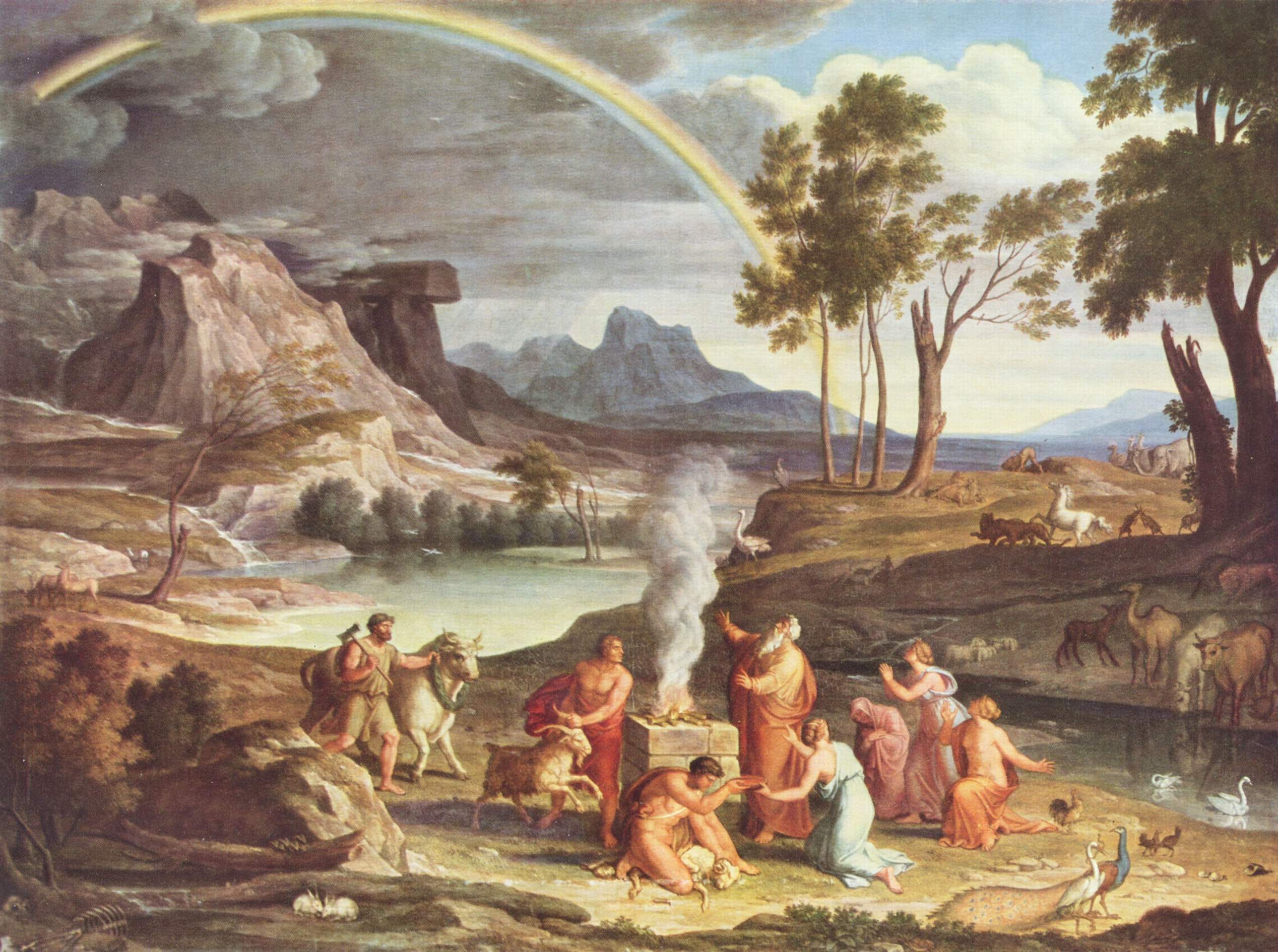
Deluge-ions of Grandeur- Was there really a worldwide flood in the time of Noach?


Last night I spoke about Noach and the flood in light of what is known today. I touched on some issues of biblical criticism, and offered three different approaches to deal with the episode of the flood. For some, the third approach, which is the one that I prefer, might be difficult to accept. I welcome all comments and thoughts as long as they are respectful. If you are uncomfortable with the ideas of biblical criticism, please do not listen, as I do not wish to challenge or damage anyone’s faith.


Here is the link to the shiur. (Running time 1:04)

Wednesday, October 15, 2014

Bayom HaHu- The redemptive meaning of Shemini Atzeret


Here is the link to the shiur I gave last night about Shemini Atzeret. In it, I try to explain the meaning of the day given its enigmatic status in that it has no mitzvot hayom or historical connection, At the end, I suggest what I hope is not just an interesting interpretation based on the Vilna Gaon, but one that I think might be correct.


Running time (55 minutes)

Chag Sameach!

Monday, October 13, 2014

HaLomeid Mi V'Im Kol Adam- Ruth Calderon's important message


I struggle to find the right words to describe the speech and shiur that I heard from MK Dr. Ruth Calderon last evening. I am not interested in writing a summary, although to be sure, I will share some of what she said. I am trying to avoid any judgment good or bad of her or her approach. To judge is to miss the point of what Calderon represents.

My first thought is of Rav Kook, Rav Nachman and Rav Tzadok. Through their thought I might find some way to take her secular view and somehow make it religious or holy. Still, this would be  wrong. Her words need no redemption. She needs no Orthodox imprimatur of approval for her ideas. Here’s the thing. If we in the Orthodox, or frum, or religious or whathaveyou world are to learn from and with Jews like Calderon, we need to recognize a simple, but some sometimes not so obvious truth. The Torah is not ours to share. It is Gods. He has given it to us, but to us in the broadest sense. To the whole Jewish people. We can not and must not insist on controlling it. We can refuse to learn Torah with anyone who will not do so on our terms and in our way, but in doing so, we not only cheat others. We also cheat ourselves.

The truth is, I’m not so sure we want to refuse. Calderon movingly told the story of a charedi man who saw her learning dafy yomi  while they were waiting at a pharmacy and decided to give her a faher (oral exam). She not only passed, but discovered that, at least for a few moments, a gemara could serve as common ground between any two Jews.

I have heard people object to her teaching Torah that is disconnected from God. That can not be further from the truth. She constantly speaks of God in very real ways, ways that feel almost shocking when I think of how rarely I and other Orthodox Jews might talk about God when we learn or teach. She is not halachically observant (although even that needs to be qualified, and a large degree of nuance) but that is not the same thing as being Godless. In fact, I can’t imagine that I am the only one who sometimes loses God in the details of halacha.

Allow me to suggest a different way that we might look at Dr. Calderon’s Torah ideas, one that is based on something she said last night in her shiur. As with her more famous shiur that she delivered in the Knesset, Calderon shared her creative reading of a piece of aggadah. As much as I was impressed by the content of the shiur, I was equally impressed by the way she described her relationship to Torah. She spoke about the aggadot of the gemara as art, and how each one speaks to her about many of the most important parts of her life. As with any good teacher, Calderon is an artist. Rather than discussing the painting that we would paint, or the one some might rather she paint, try to take in the image she is creating. Her ideas about God, Judaism religion and Torah will challenge you. They will make you think. Even more than we owe it to her, we owe it to ourselves to listen to her Torah.

Ayeka- A Poem


I could not find you today,
in the three times that I prayed,
or in the bright autumn leaves,
or even in my wife's smile.
Perhaps, alone, late at night,
I might yet find you,
deep within myself.

Wednesday, October 8, 2014

Sukkot Shiur- forgiveness, unity, humility and hope


Here’s a recording of my latest shiur/class. This one is about Sukkot, it’s connection to the Yamim Noraim, wealth, hope and more.

Symbolism, forgiveness, king and queen, messianic figures, unity. This shiur has it all.

Tuesday, October 7, 2014

Bridges- Are we willing to listen?


Last night was a first for me on two accounts. Until last night, I had never been in a Reconstructionist temple. More importantly, before last night, I had never heard a Palestinian speak in person about peace.

When I first heard that Ali Abu Awwad would speaking in nearby Montclair, I knew I had to be there. Awwad is an activist and pacifist who, along with my former neighbor Rabbi Hanan Schlesinger, founded Roots, a Gush Etzion based organization whose goal is to produce dialogue and trust between Israelis and Palestinians. He knows well the costs of war having lost a brother who was shot and killed by an Israeli soldier. Awwad, along with his family, have gotten involved in Bereaved Family Forum, an organization where families on both sides of the conflict who have lost family members join to speak and grieve together.

As someone who continues to hope against hope that eventually there can and will be a peaceful resolution to the conflict, I was interested in hearing from someone on the Palestinian side who believes in such a vision. This was an opportunity to give lie to the claim that there is nobody on the Palestinian side who believes in peace. Awwad, who started off by wishing us a “Shana Tova” and “Gmar Chatima Tova”, spoke with passion, warmth and humor. He described the irony of the need for himself, a Palestinian, to tell left-wing Israelis that they need to be willing to speak with “settlers”. He made it clear that his group is still small, but that a bridge completed by a few hundred people can build a bridge that can be crossed by millions. He spoke about the need for both sides to speak with one another, to move past thoughts of violence and revenge, and to stop competing for who has the more tragic narrative.

As I listened to Awwad speak, I wondered whether he would have the opportunity to speak to the Orthodox community, and how my fellow co-denominationalists would relate to his message. I wondered why it was that I had to go to a Reconstructionist temple to hear Awwad’s message. I was curious whether Modern-Orthodox Jews, so open to modernity in so many ways, could  accept a narrative that is different than the one-dimensional one that they have often had reinforced in schools and shuls. Of course, for those of us living outside of Israel, it is not our job to advocate for positions with which we ourselves will not have to deal with the consequences. Still, I believe that there is great value in hearing a more balanced and nuanced view than the one we often hear.

If you share my hope, commitment to hearing from all sides, and willingness to have your views challenged, I would encourage you to try and bring speakers like Awwad to your community. I’d like to think that he would welcomed, and once his message has been heard, embraced.